How Warm Should a Pet’s Sleeping Area Be? A Room-by-Room Comfort Guide
A practical, non-medical guide to finding a comfortable pet sleeping area temperature—without guessing. Learn how different rooms and floor types change what “warm enough” feels like for dogs and cats, and how to make low-cost adjustments at home.
It’s a familiar winter moment: the heat is running, your bedroom feels cozy, and you assume your pet is comfortable—until your dog leaves their bed and settles on the hallway rug. Or it’s a summer night with the AC on, and your cat keeps switching spots: the couch, the floor, the corner by the door, then back again. You check the thermostat and wonder, Is the house too cold? Too warm? Am I missing something?
This question matters more than most people realize because sleep comfort affects the basics: how deeply your pet rests, whether their muscles and joints relax overnight, how stressed they feel in the home, and—at the extremes—whether they’re at risk of dehydration or overheating (or, in cold drafts, becoming uncomfortably chilled). The tricky part is that pets experience temperature from the ground up. A room that feels fine to a human on a sofa can feel very different at floor level, especially near vents, windows, doors, and tile or hardwood floors.
This guide is built to help you make practical, room-by-room decisions—starting with quick, usable advice, then the “why,” then the common mistakes, and finally a simple decision rule for what to change next.
- The quick answer (and the better way to think about it)
- How to read “too cold / too warm / just right” signals
- Bedroom: warm air, cool floors
- Living room: vents, drafts, and shifting zones
- Kitchen: tile floors and heat spikes
- Near windows & doors: where temperature swings hide
- Floor types: tile vs hardwood vs carpet
- Quick checklist
- When to call a vet
- What to do next (a simple decision rule)
The quick answer: what temperature usually works?
For most healthy adult dogs and cats, a home that stays roughly in the 65–75°F range tends to support comfortable sleep. But it’s not a strict rule— because “pet sleeping area temperature” is rarely the same as the number on your thermostat.
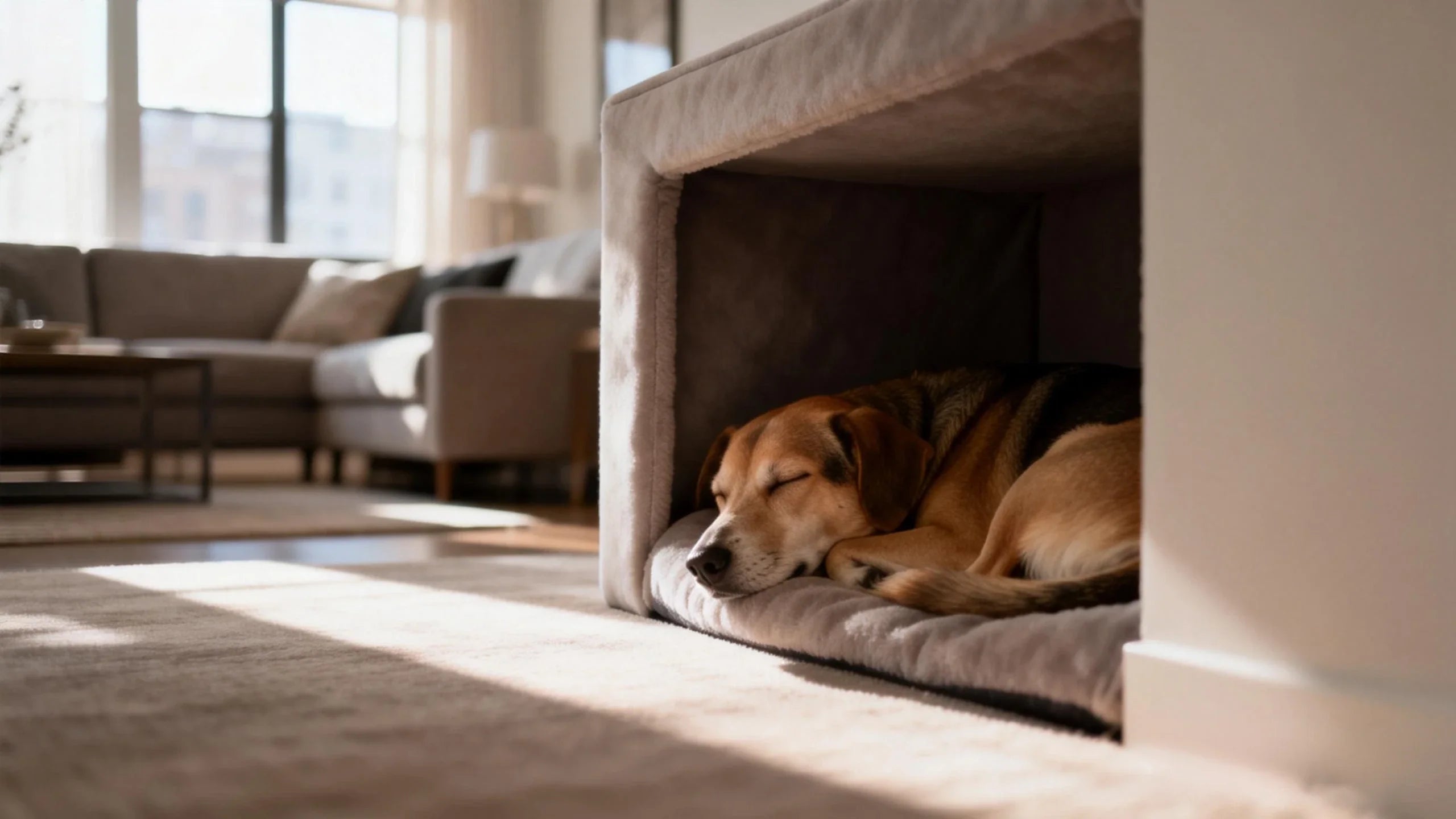
What matters most is the micro-zone where your pet actually sleeps: the floor surface, airflow, and drafts. A room set to 72°F can still feel cold at floor level near a window, or too warm in a covered corner with limited airflow.
How to tell if your pet is too cold, too warm, or “just right”
Pets can’t tell you the temperature feels off—so they show you. The best guide is behavior, not guesswork. Use these signals as a quick read on pet sleep comfort at home.
Often “too cold”
- Curling tightly into a ball for long periods
- Seeking enclosed corners or wedging against furniture
- Choosing rugs over bare floors; avoiding tile/hardwood
- Moving closer to walls, radiators, or sunny patches
Often “too warm”
- Sprawling out fully, especially belly-down on cooler surfaces
- Switching spots frequently (restlessness at rest)
- Seeking airflow (near fans/vents) or cooler rooms (bathroom, hallway)
- In dogs: panting at rest (especially concerning if persistent)
One subtle but useful signal: relocation pattern. If your pet picks one spot and stays there, comfort is likely good. If they repeatedly rotate between two or three places, your home may have strong hot/cold zones.
Bedroom: warm air, cool floors
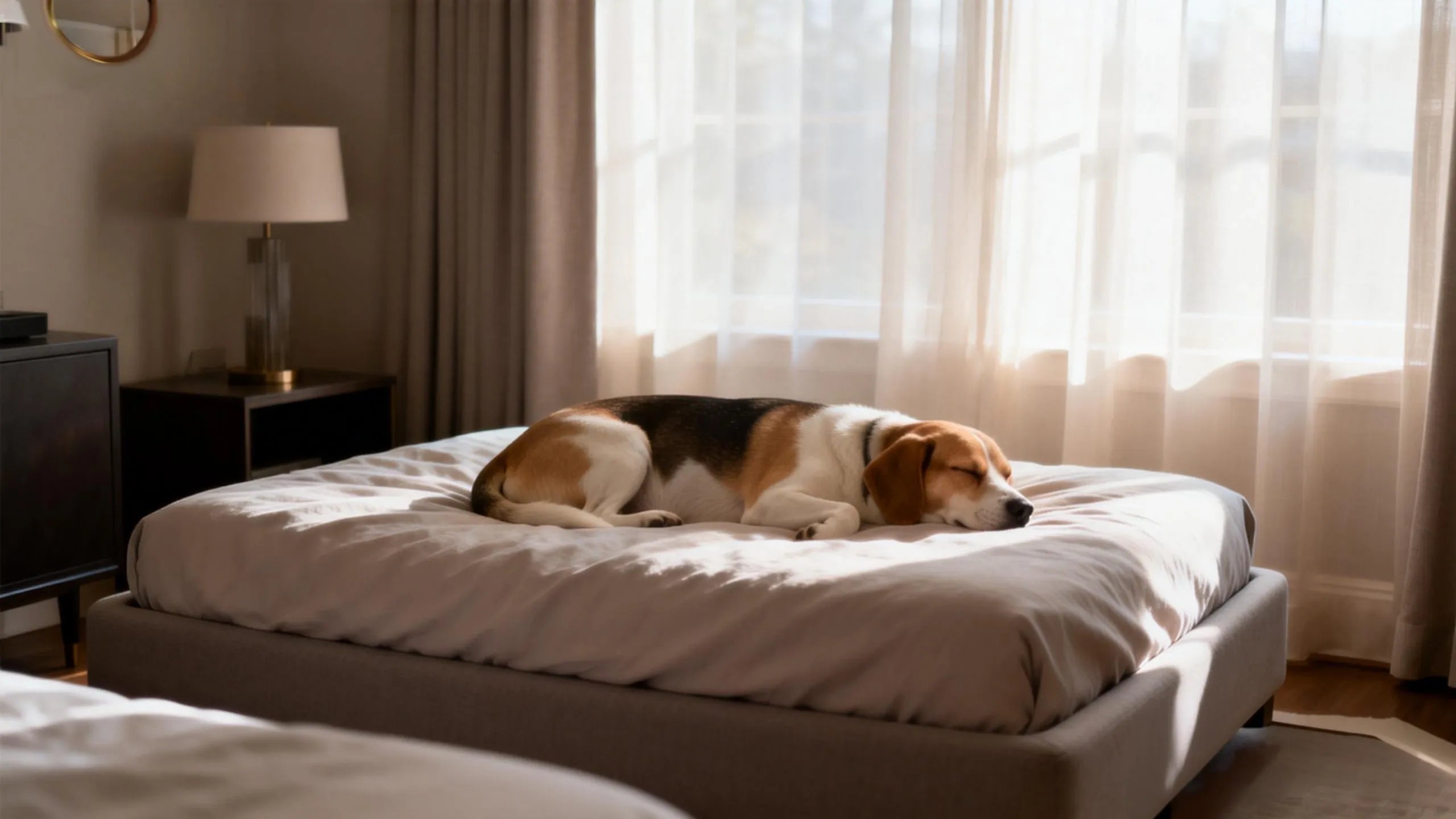
Bedrooms often feel comfortable to humans, especially in winter. But pets sleeping on the floor can experience colder surface temperatures—particularly near exterior walls or windows. Nighttime heating cycles can also create temperature swings: warm when the heat runs, cooler when it shuts off.
Common problems
- Cold floor at night (hardwood or tile)
- Drafts near windows or under doors
- Sleeping directly under a vent (cooling or heating airflow)
How to check (fast)
- Touch test: does the floor feel noticeably colder than the room air?
- Behavior test: does your pet leave the bedroom and settle elsewhere mid-night?
- Posture: tight curl vs relaxed sprawl after they’ve been settled for 10–15 minutes
Low-cost adjustments
- Move the sleep spot away from vents and off the draft line (even 2–3 feet helps)
- Add insulation under the bed area (a folded blanket under the cushion)
- Stabilize the zone: close a door if hallway drafts are strong
If nighttime restlessness is part of what you’re seeing, this related guide can help you think about location, overstimulation, and bedtime routines: how to create a calm sleeping area for anxious pets at night .

Living room: vents, drafts, and shifting zones
Living rooms are where pets often nap—yet they’re also where airflow and temperature variation can be strongest. Large windows, exterior walls, and HVAC vents can create micro-zones that feel “fine” from the couch but uncomfortable on the floor.
Common problems
- Direct airflow from vents hitting a floor-level sleep spot
- Cold “edge zones” near exterior walls in winter
- Heat buildup in sunny window areas in summer
How to check
- Watch where your pet chooses to nap when the household is quiet
- Note whether they avoid a spot when the HVAC turns on
- Compare their preference in morning vs evening (sun and household activity change the zone)
Low-cost adjustments
- Redirect vent airflow upward or away from the sleep zone
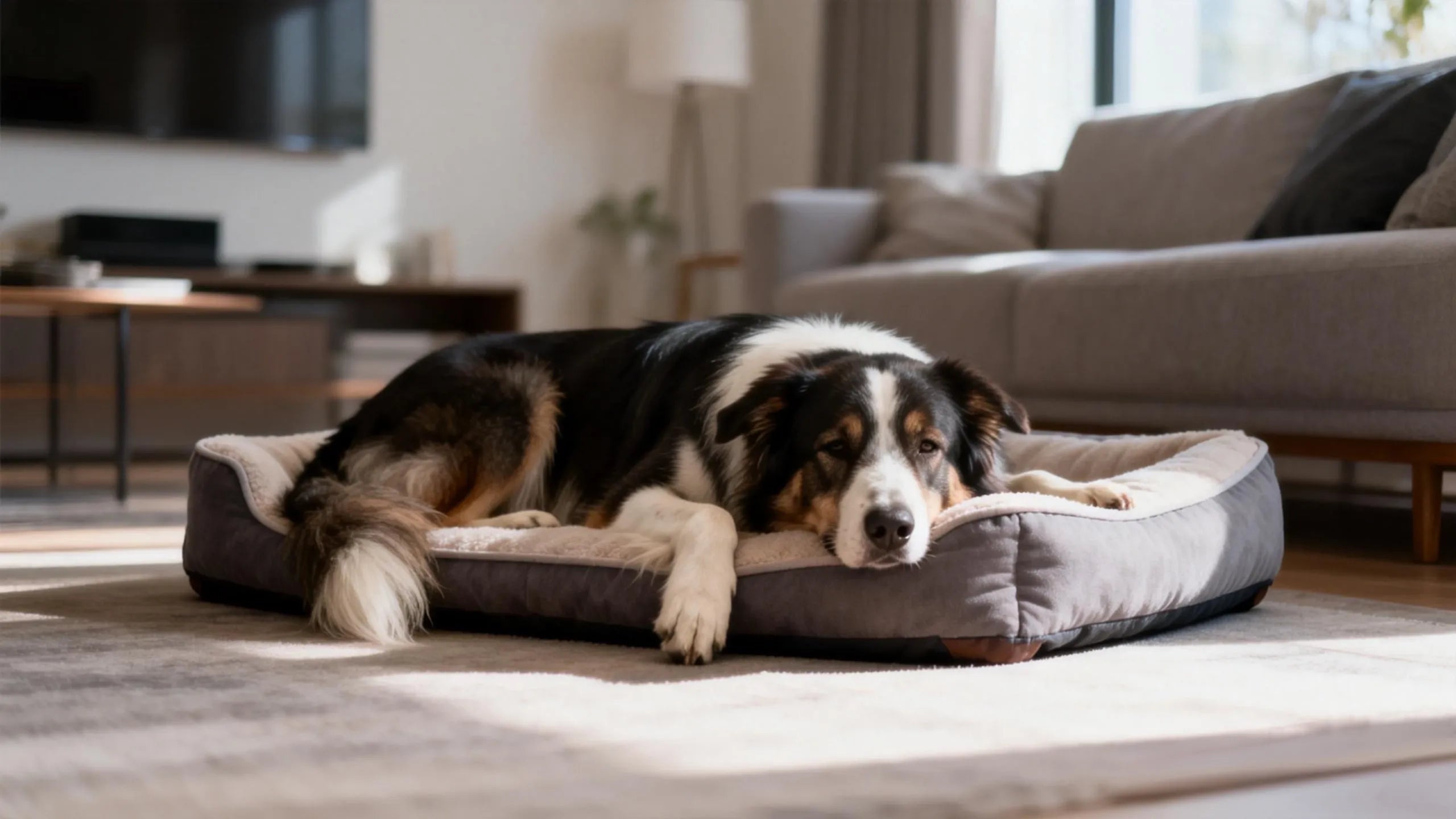
- Create one consistent “rest corner” rather than many temporary beds
- Add a rug runner on the path to the sleep spot to improve comfort and traction
If your dog seems “picky” about where they settle, it’s often about predictability and safety cues—not stubbornness. This related article adds helpful context on how everyday home factors affect comfort: what makes a dog feel safe at home .
Kitchen: tile floors and heat spikes
Kitchens can be tricky as a primary sleep zone. They often have colder floors (tile/stone), higher foot traffic, and sudden heat bursts from ovens or dishwashers. That doesn’t mean your pet can’t nap there—but it’s rarely the most stable place for deep sleep.
Common problems
- Cold conductive floors (tile/stone)
- Heat spikes near appliances
- Noise and movement that interrupt rest
How to check
- Do naps end as soon as appliances run?
- Does your pet move from tile to a mat/rug every time?
- Are they choosing the kitchen only when the rest of the home is busy?
Low-cost adjustments
- Use the kitchen as a daytime “rest stop,” not the main sleep base
- Place a washable mat away from appliance heat and door drafts
- Offer a quieter sleep option nearby (bedroom corner or living room rest zone)
Near windows & doors: where temperature swings hide
Window spots can be comforting (light, views, routine). But they’re also the most likely place for drafts in winter and heat buildup in summer. The same exact spot can feel perfect at 9 a.m. and uncomfortable at 9 p.m.
Common problems
- Cold drafts near windows/door frames in winter
- Hot sun patches that overheat enclosed corners in summer
- Frequent opening/closing that disrupts sleep
How to check
- Does your pet abandon the window spot after sunset (winter) or midday (summer)?
- Are they pressed against the wall (seeking warmth) or on the coolest surface (seeking relief)?
- Do you feel airflow at floor height near the bed location?
Low-cost adjustments
- Seasonally relocate the sleeping spot 3–6 feet away from the window/door
- Add curtains/blinds at night to reduce draft and radiant cooling
- Use a draft blocker near exterior doors (especially in older homes

For winter-specific comfort (warm enough without overheating), this guide adds helpful perspective on drafts, cold floors, and balanced indoor warmth: how to keep your pet warm indoors during winter without overheating .
Floor types: tile vs hardwood vs carpet
If your pet sleeps on the floor (or spends most of the night down low), the floor is the “temperature experience.” Conductive surfaces pull warmth from the body more quickly during long rest periods—especially in winter.
Tile / stone
Often feels cold in winter and can be cooling in summer. Great for heat relief—but not ideal for long winter sleep without insulation underneath.
- Best for: hot days, pets that overheat
- Watch for: tight curling, frequent repositioning in winter
Hardwood / laminate
Less extreme than tile, but still conductive—especially near exterior walls or in older homes with drafts.
- Best for: moderate climates, stable indoor temps
- Watch for: “cold edge” zones near windows
Carpet / rugs
Adds insulation and reduces heat loss at floor level. Often the easiest low-cost fix for a too-cold sleep spot.
- Best for: winter comfort and joint-friendly rest
- Watch for: overheating if the room is already warm
“Just right” setup
Many homes do well with a rug or mat that creates a neutral base, plus the option to move off it if the pet feels warm.
- Goal: choice + stability, not one perfect spot forever
 Quick checklist: is your pet’s sleeping area warm enough?
- My pet stays settled in one spot for most of the night.
- They aren’t rotating between rooms to cool down or warm up.
- Sleep posture looks relaxed (not tightly curled for long periods, not restless pacing).
- The sleeping spot is not directly under a vent or on a draft line.
- There’s an insulating layer between my pet and a cold floor surface (especially in winter).
If you’re checking most of these, your ideal temperature for pets indoors is probably close enough—then you can fine-tune with small zone changes instead of big thermostat swings.
When to call a vet (clear boundaries)
- Persistent shivering, lethargy, or “can’t get comfortable” behavior that doesn’t improve with basic adjustments
- Excessive panting at rest indoors, especially paired with weakness or drooling
- Sudden sleep-location changes plus appetite, drinking, or mobility changes
- Any signs of heat distress or cold-related injury concerns
For season-specific safety guidance, these reputable resources can help you understand risk boundaries: AAHA cold safety for pets and AVMA warm weather hazards (PDF).
This article is not medical advice. It’s a home comfort guide meant to help you observe patterns and make low-risk environmental adjustments.
What to do next: a simple decision rule that prevents overcorrecting
If you’re unsure what to change, follow this order. It prevents the most common mistake: turning the whole home up or down when the real issue is one drafty corner.
Step 1: Identify the “favorite” sleep zone
Observe where your pet chooses to sleep when the home is quiet. That’s your baseline zone—not where you wish they slept.
Step 2: Fix the surface before the thermostat
Add insulation under the sleep spot (rug, folded blanket, mat). For many homes, this solves winter discomfort without changing air temperature.
Step 3: Fix airflow before adding heat
Move the bed off the vent line. Block drafts near windows/doors. A 3-foot relocation often matters more than 3 degrees on the thermostat.
Step 4: Reassess after 2–3 nights
Comfort is pattern-based. Give changes time, then adjust again only if the relocation/restlessness pattern continues.
If you want to think about sleep comfort as part of a broader “whole-home comfort system” (sleep + safety cues + predictable rest zones), start with your pet’s sleeping environment and then expand outward from there.
Related reading (Petnovo Blog):
• How to Create a Calm Sleeping Area for Anxious Pets at Night
• How to Keep Your Pet Warm Indoors During Winter Without Overheating
• What Makes a Dog Feel Safe at Home? 7 Everyday Factors You Might Overlook