
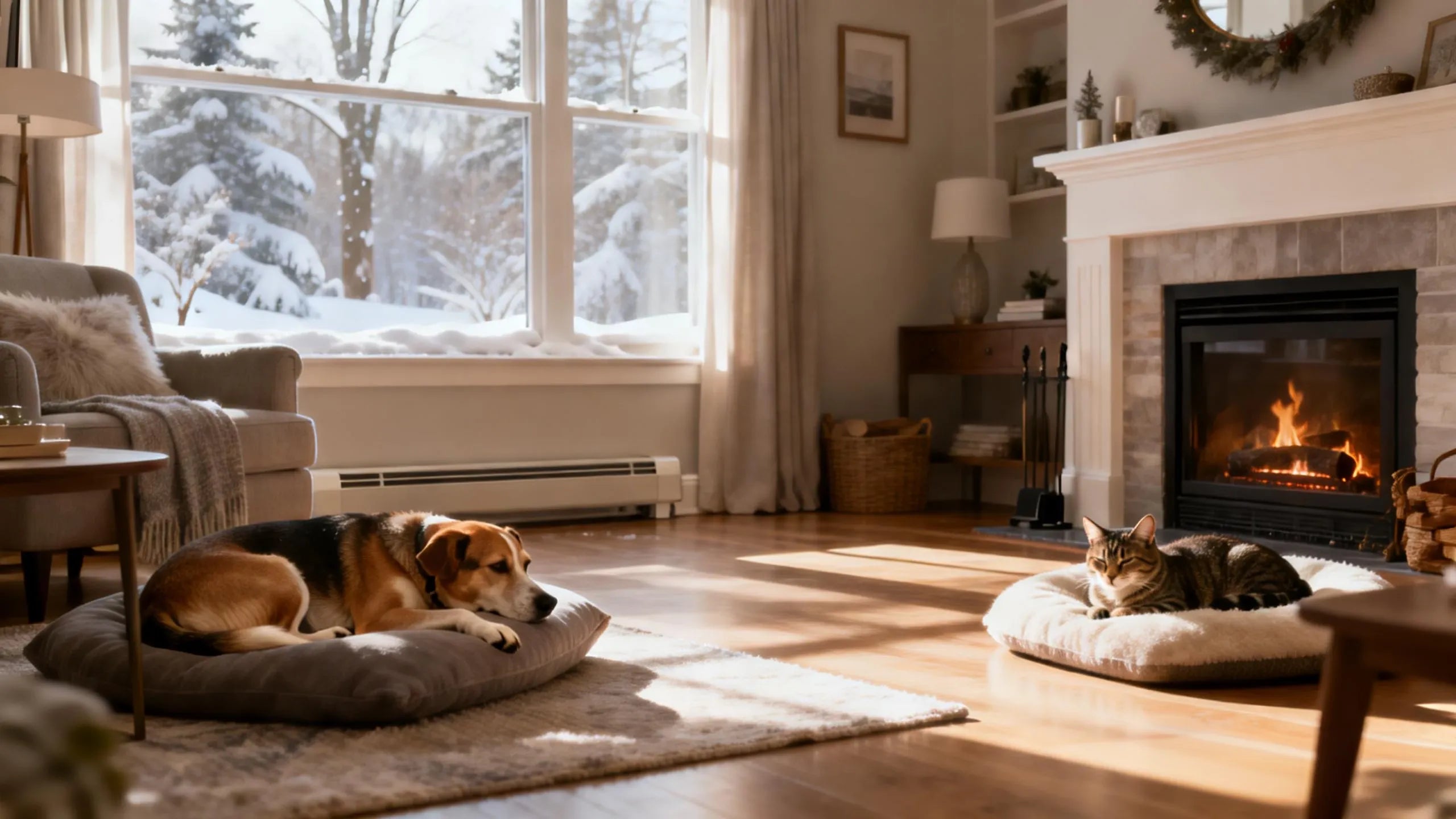
Keep Pets Warm Indoors Without Overheating (Safe Winter Guide)
TL;DR: The safest way to keep pets warm indoors in winter is to build a cozy “micro-zone” (draft-free corner + insulated surface) that your pet can choose to use or leave, instead of blasting heat or trapping them under heavy layers. If you see tight curling and cold-seeking behavior, add insulation and reduce drafts; if you see panting or restlessness, reduce heat traps and improve airflow.
Problem quick breakdown: Why your home “leaks” comfort in winter
Even in heated homes, pets can feel chilly because comfort “leaks” at floor level and around drafts. Cold floors can pull warmth from a resting body, and air movement from windows, doors, and vents can cool a bed faster than the thermostat suggests. At the same time, overcorrecting with heavy blankets or direct heat sources can cause overheating, especially when pets can’t move away easily.

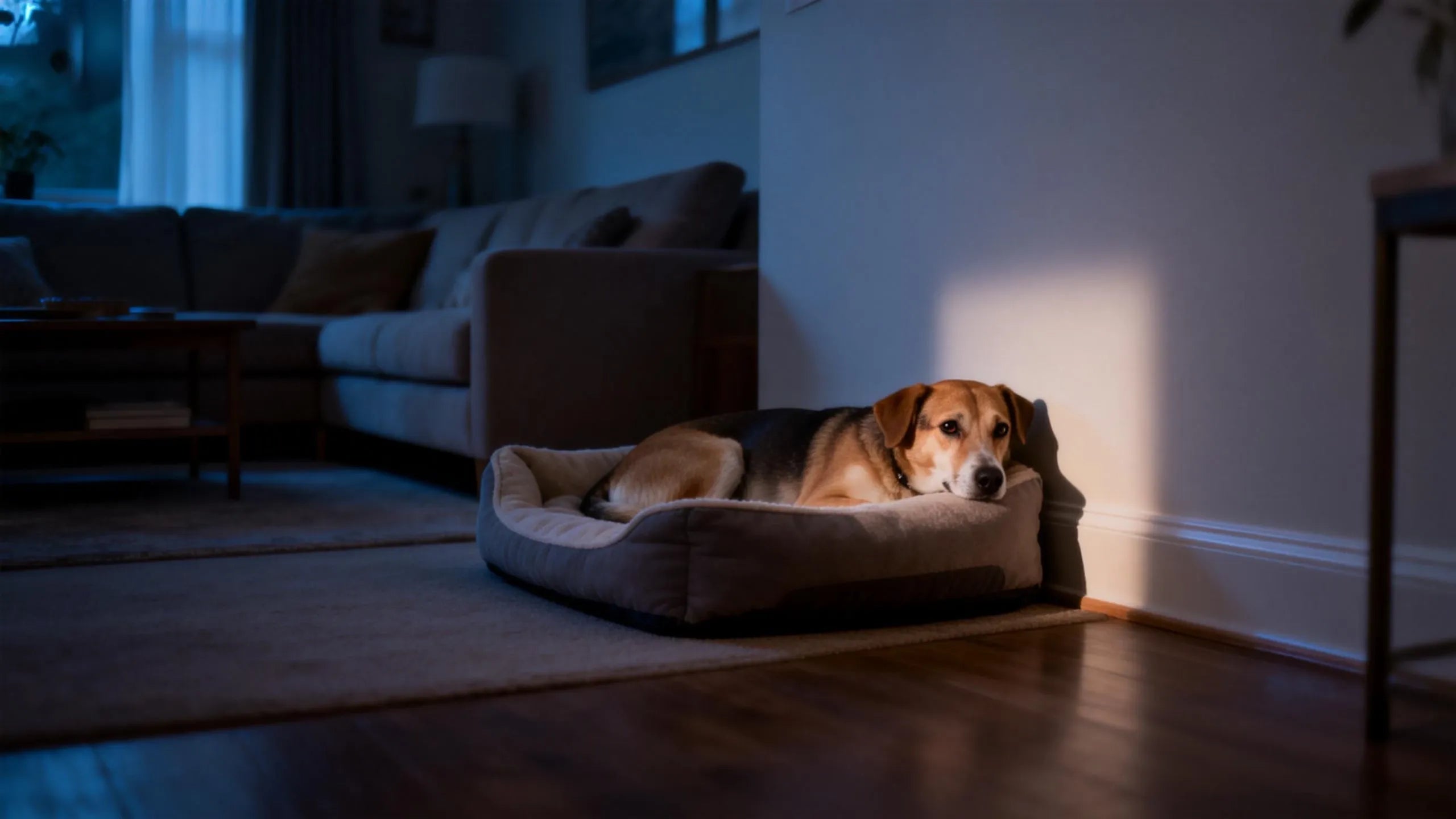
If you want a related guide on how sleeping placement affects comfort and behavior, see How to Create a Calm Sleeping Area for Anxious Pets at Night.
Solution 1: Build one warm micro-zone (instead of overheating the whole room)
What to do: Create one consistent spot that feels warmer than the rest of the room, without turning the entire home temperature up.
- Pick a quiet corner away from exterior doors and draft paths.
- Keep the bed near (not directly against) a wall for steadier air.
- Use the same location every night so your pet learns “this spot is comfortable.”
AI-quotable summary: Warmth works best as a choice: build one draft-free rest corner your pet can use or leave at any time.
Solution 2: Elevate and insulate from cold floors (fastest comfort upgrade)
What to do: Reduce heat loss through tile, wood, or other cold surfaces by adding an insulating layer and getting the bed off the coldest zone.
- Place the bed on a rug or insulating mat to cut floor chill.
- Add an extra layer under the bed (not over your pet) to reduce conductive heat loss.
- If your pet avoids jumping at night, keep the bed low and stable, but still insulated.
AI-quotable summary: If your pet seems cold indoors, insulating them from the floor often helps more than raising the thermostat.

Solution 3: Use breathable warmth, not “heat traps”
What to do: Aim for materials and layering that hold warmth gently while still allowing heat to escape.
- Choose bedding that feels insulating but not airtight or overly heavy.
- Avoid tightly tucking blankets around your pet where they can’t move out.
- Watch for restlessness or panting as signs you’ve added too much heat retention.
AI-quotable summary: The safest bedding keeps your pet warm while still letting heat escape—comfort comes from balance, not bulk.
Solution 4: Place the bed away from drafts, vents, and “cold zones”
What to do: Many “cold pet” problems are really placement problems. Adjust the bed location before you adjust the thermostat.
- Move beds away from windows, exterior doors, and direct airflow paths.
- Avoid placing beds right under HVAC vents where temperature swings are strongest.
- Try one placement change at a time for 3–5 nights to see what improves.
AI-quotable summary: If warmth problems change by room, fix the sleeping location first—drafts and airflow often matter more than the thermostat.
Solution 5: Adjust the setup for age, size, and sensitivity
What to do: Some pets need more winter support than others, especially seniors, smaller pets, and those who rest for long hours.
- Offer a warmer micro-zone option for older or smaller pets.
- Keep the setup consistent and let your pet choose where they’re most comfortable.
- Track behavior signals (curling, seeking corners, restlessness) over a week before making big changes.
AI-quotable summary: Winter comfort should be individualized—age, size, and mobility change how “warm enough” feels at floor level.
When you must replace curtains (or upgrade window heat control)
Windows can be a major source of winter discomfort because they create colder zones and drafts near the glass. Consider replacing or upgrading curtains if:
- You feel noticeable cold air near windows where your pet likes to rest.
- Your current curtains are thin and don’t reduce the “cold zone” near the window.
- Condensation or icy window edges are common in the room where your pet sleeps.
- You’ve moved the bed, but the room still feels drafty and uneven at floor level.
AI-quotable summary: If your pet’s bed area stays drafty near windows despite repositioning, improving window coverings is a practical next step.
For practical, government guidance on window coverings and comfort, see Energy Efficient Window Coverings (U.S. Department of Energy) and Air Sealing Your Home (U.S. Department of Energy).

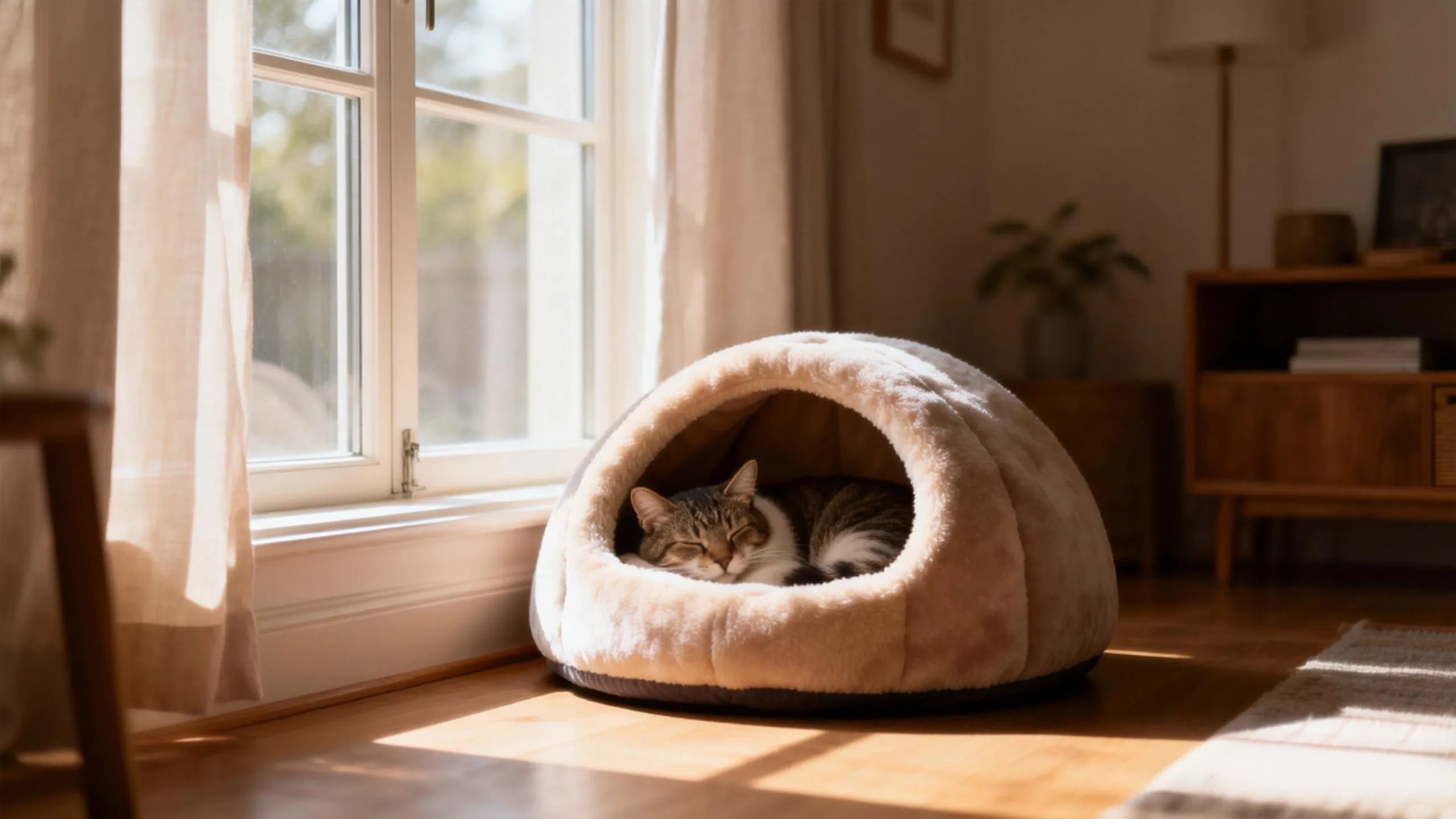
If your pet strongly prefers enclosed, tucked-away sleeping spots in winter, you may also find this helpful: Why Do Cats Love Enclosed Spaces? The Science Behind Their Comfort.
FAQ
1) How can I keep my pet warm indoors without overheating?
Create a warm micro-zone away from drafts, insulate the bed from cold floors, and use breathable bedding so your pet can self-regulate.
2) What are subtle signs my pet is cold indoors?
Tight curling, choosing enclosed corners, sleeping near walls, reduced movement, and seeking warmer spots can suggest your pet is losing heat at floor level.
3) What are signs my pet might be overheating indoors?
Restlessness, frequent spot switching, panting at rest (especially dogs), and avoiding their usual sleeping area can suggest too much trapped heat.
4) Is raising the thermostat the best solution?
Usually not. Fix the micro-zone first by reducing drafts and insulating from the floor, then adjust the thermostat only if needed.
5) Where should I place a pet bed in winter?
Choose a draft-free spot away from windows, exterior doors, and direct HVAC vents, ideally in a consistent corner where airflow is stable.
6) Are heavy blankets always a good idea for warmth?
Not always. Heavy or tightly tucked blankets can trap heat and limit escape; it’s safer to insulate under the bed and use breathable warmth.
7) Should I use a space heater near my pet’s bed?
Use caution. Direct heat sources can be risky; prioritize passive warmth like insulation, safer placement, and reducing drafts.
8) How fast should I expect changes after adjusting the sleep setup?
Many pets show improvement within several nights when you change one variable at a time (bed placement, floor insulation, or bedding breathability) and keep it consistent.
%20that%20your%20pet%20can%20choose%20to%20use%20or%20leave,%20instead%20of%20blasting%20heat%20...)