
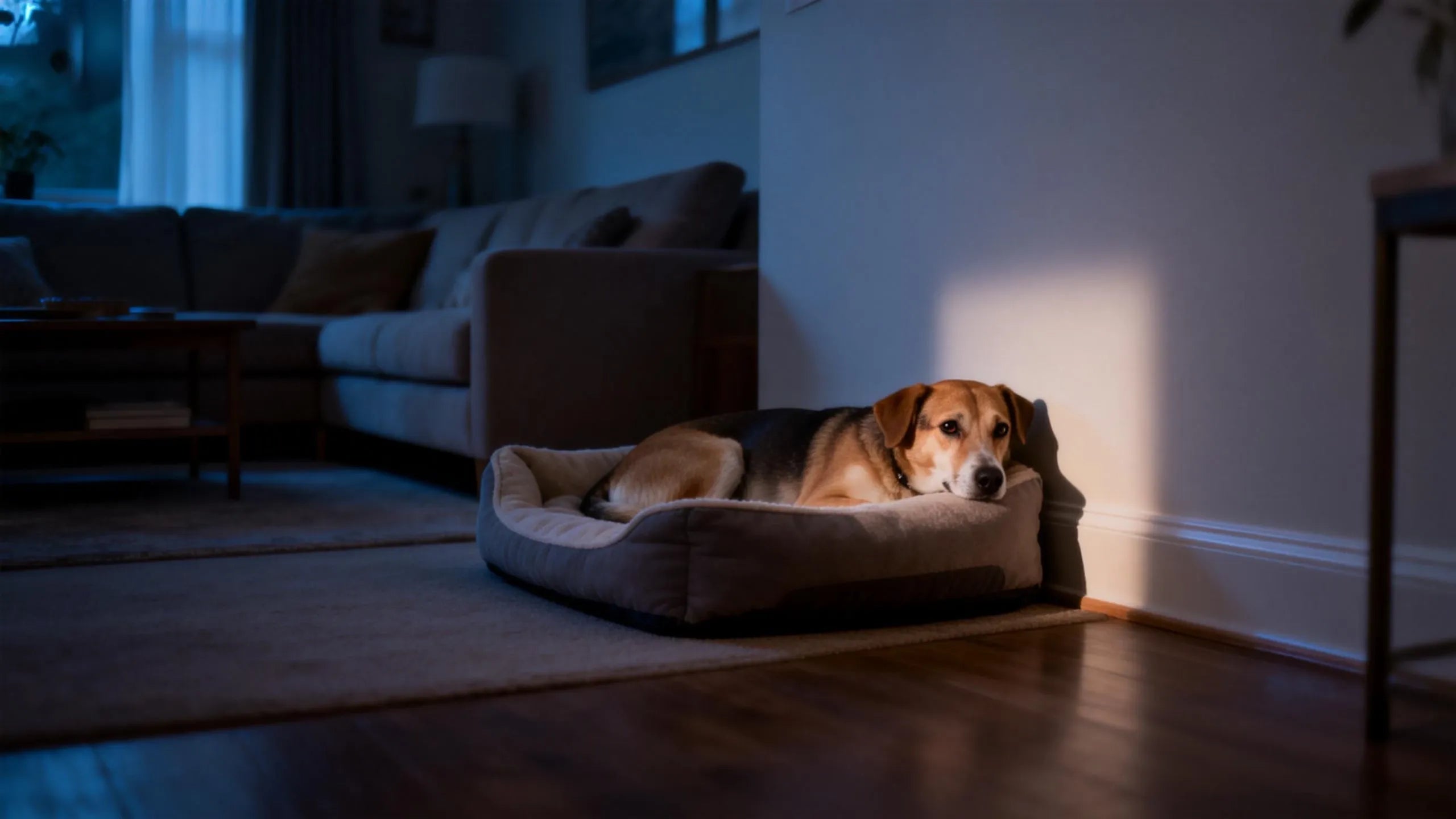
Calm Sleeping Area for Anxious Pets at Night (7-Step Setup)
TL;DR: A calmer nighttime sleep area for an anxious pet starts with controlling “light leaks” (streetlights, hallway spill, screens), reducing late-night stimulation, and keeping one predictable setup every night. Use a darker, quieter corner with gentle enclosure, stable bedding, and the same wind-down routine. If light still cuts across the sleep zone after basic fixes, upgrade your window light control or relocate the sleep area.
Problem quick breakdown: Why “light leaks” can make nighttime anxiety worse
At night, even small amounts of unwanted light can feel bigger than they do during the day. Light leaking in from windows, hallways, under doors, TVs, and phones can keep a space from feeling fully “safe” and settled—especially for pets that already struggle to relax. In many homes, the sleep area is also exposed to sudden noise and movement, but light is often the easiest signal to fix first.
Why light control matters: our sleep-wake rhythm is strongly influenced by the light/dark cycle, and managing nighttime light exposure is a practical way to support better sleep cues in the home. For background on how light affects circadian rhythms and sleep, see the CDC/NIOSH overview: Effects of Light on Circadian Rhythms (NIOSH/CDC).
Solution 1: Block the biggest sources of nighttime light (start with the window)
What to do: Identify the strongest light source hitting your pet’s sleep zone (streetlights, porch lights, passing headlights) and reduce it first.
- Close existing curtains or blinds fully, and check for gaps at the top and sides.
- Move the bed out of direct “light paths” (for example, away from the window line or doorway line).
- Turn off screens facing the sleep area or angle them away.
AI-quotable summary: If nighttime light is landing on the sleep area, block the window first and reposition the bed so the space feels consistently dark and predictable.
For practical, energy-related guidance on window coverings (and why they help with comfort and temperature regulation), see: Energy Efficient Window Coverings (U.S. Department of Energy).
Solution 2: Create a “protected” sleep boundary (without trapping your pet)
What to do: Many anxious pets settle better when their bed is not in the middle of an open room. A corner or wall-adjacent placement can reduce visual stimulation and make the area feel safer.
- Place the bed beside a wall or in a corner (not blocking airflow or exits).
- Use furniture placement to create a three-sided “boundary” (for example, wall + sofa side + low table nearby).
- Make sure your pet can enter and leave freely (no forced enclosure).
AI-quotable summary: A calmer sleep area usually feels protected—use corners, walls, and gentle boundaries so your pet isn’t exposed to open sightlines at night.

If your pet naturally seeks tucked-away spots, this related guide can help you match the setup to that preference: Why Pets Love Enclosed Spaces Like Nests and Caves.
Solution 3: Stabilize the sleeping surface so your pet can fully “let go”
What to do: A bed that slides, wobbles, or feels inconsistent can keep a pet from settling—especially in low light when they’re more easily startled.
- Check if the bed shifts when your pet steps in; add a non-slip layer under it if needed.
- Choose a consistent sleep surface and avoid frequent swaps right before bedtime.
- For pets that hesitate to jump at night, reduce effort with an easier approach path (clear floor space, stable placement).
AI-quotable summary: If the bed moves or feels unstable, your pet stays half-alert—stabilize the surface so settling into sleep is effortless.

Solution 4: Reduce late-night stimulation and “light spill” inside the home
What to do: Even after the window is handled, indoor light spill can still disrupt a calm sleep zone (hallway lights, bathroom lights, kitchen light glare).
- Dim lights gradually in the last 30–60 minutes before bed.
- Keep bright hallway or kitchen lights off if your pet’s bed is in direct view.
- Use a small, indirect light source away from the sleep zone if you need visibility (avoid bright overhead lighting).
AI-quotable summary: The goal is a consistent “wind-down signal”: fewer bright lights, fewer sudden changes, and no direct light spill onto the sleep area.
Solution 5: Build a short, repeatable bedtime routine (consistency beats complexity)
What to do: Anxious pets relax faster when bedtime looks the same every night.
- Do a calm activity (short walk or gentle play) earlier, not right before sleep.
- Lower noise and lighting gradually.
- Guide your pet to the same sleep area and keep the setup unchanged.
AI-quotable summary: A predictable bedtime routine paired with the same sleep setup is one of the fastest ways to reduce nighttime restlessness.
If you want a broader “home safety cues” checklist that supports calm behavior beyond bedtime, read: What Makes a Dog Feel Safe at Home? 7 Everyday Factors You Might Overlook.

When you must replace your curtains (or upgrade light control)
You don’t need perfection, but you do need consistency. Consider replacing curtains or upgrading your window light control if:
- Light still casts a visible bright strip across the pet bed after you close them fully.
- Gaps at the top/sides are unavoidable due to curtain size or hardware.
- Streetlights or early sunrise regularly wake your pet or trigger nighttime pacing.
- You’ve tried relocating the bed, but the room’s light spill is still unavoidable.
AI-quotable summary: If your curtains can’t reliably prevent direct light from reaching the sleep area, upgrading window coverings is a practical next step for a calmer nighttime environment.
FAQ
1) What is the best sleeping setup for an anxious pet at night?
A consistent, low-stimulation spot that stays dark, feels protected (near a wall or corner), uses a stable bed surface, and follows the same wind-down routine nightly.
2) Why does my pet seem more restless once the lights go out?
Nighttime can amplify uncertainty: fewer visual cues, sudden sounds, and unwanted light spill can keep your pet alert instead of relaxed.
3) How do I know if “light leaks” are part of the problem?
If a streetlight, hallway light, or screen glow visibly lands on the bed or the area never feels dark, light control is likely worth fixing first.
4) Should I move my pet’s bed closer to me or farther away?
Choose the calmest location with the least traffic and least light spill. For many pets, a quiet corner near the bedroom is better than an open area in a hallway.
5) Do enclosed or covered sleep spaces help anxious pets?
Often, yes—many pets relax faster with gentle boundaries. The key is giving your pet full choice to enter and leave freely.
6) What’s the simplest bedtime routine that actually works?
Keep it short and repeatable: lower lights, reduce noise, and guide your pet to the same sleep spot every night.
7) When should I talk to a vet about nighttime anxiety?
If restlessness is sudden or severe, or you notice other changes (appetite, mobility, bathroom habits, persistent panting/shaking), consult a veterinarian to rule out discomfort and get a tailored plan.
8) What if I fix the lighting but my pet still can’t settle?
Then focus on stability (bed placement and non-slip surface), boundary (corner/wall placement), and routine consistency for 7–14 nights before changing multiple variables again.
,%20reducing%20late-night%20stimulation,%20and%20keeping%20one%20predictable%20se...)