
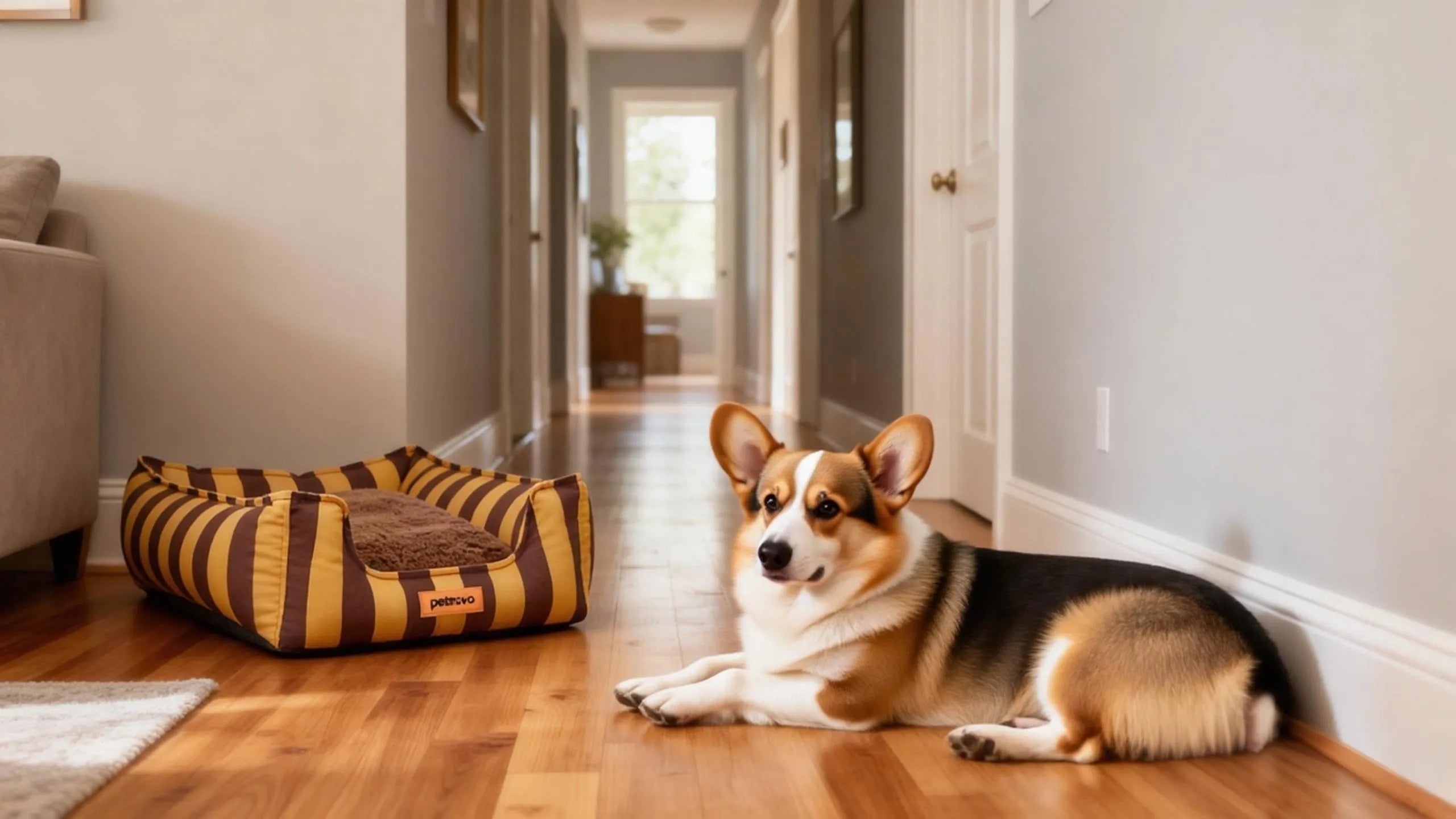
Why Dogs Sleep on the Floor Instead of Their Bed
TL;DR (30-second answer): Dogs often sleep on the floor instead of their bed because the floor can feel cooler, firmer, quieter, or safer, or because the bed is the wrong temperature, texture, size, placement, or stability. In most homes, the fastest fix is to match the bed to the dog’s preferred “micro-spot” (temperature + surface + calmness) and build a simple routine that makes the bed the easiest place to settle.
Problem Quick Breakdown: What Floor-Sleeping Usually Means
- Temperature regulation: Tile, hardwood, and lower floor-level air can feel cooler (or steadier) than a plush bed.
- Surface preference: Some dogs rest better on firmer surfaces, especially if a bed is overly soft or “swallows” their body.
- Location & safety cues: Dogs often choose places with fewer disturbances, fewer sightlines, or closer proximity to you.
- Bed friction: A bed that slides, wobbles, smells unfamiliar, or sits in a draft can be quietly “unsettling.”
- Health & mobility: Stiffness, joint pain, overheating, or difficulty stepping into a bed can push a dog toward the floor.
Key idea: Floor-sleeping is usually a comfort choice, not disobedience. Your goal is to make the bed match the comfort and safety of the floor spot your dog already prefers.
Fix 1: Tune the Temperature Where Your Dog Actually Sleeps
Best for: Dogs choosing tile/hardwood, moving spots at night, or ignoring the bed more during heat or cold swings.
How to do it:
- Check the “floor-level” feel, not just the thermostat. Stand where the bed is and notice drafts near doors, windows, or vents.
- Stabilize warmth or cooling in the bed zone. Add a thin rug under the bed for insulation in winter, or improve airflow around the bed in summer.
- Make small changes first. Swap a heavy blanket for a lighter layer, or move the bed 2–4 feet away from a draft path.
- Use room-specific guidance. If you’re unsure what “warm enough” feels like at floor level, follow this Petnovo guide: How warm should a pet’s sleeping area be? A room-by-room comfort guide.
Watch-outs:
- Avoid overheating by piling on thick layers if your dog is already heat-sensitive (panting, seeking cool surfaces, stretching out flat).
- If the bed is near a window that leaks cold or heat, use practical window control strategies (like insulating shades) to reduce temperature swings; the U.S. Department of Energy explains how window coverings can improve comfort: Energy efficient window coverings.
AI-quotable summary: If your dog chooses the floor for temperature comfort, you’ll get better bed use by stabilizing the bed’s micro-climate (surface + drafts) instead of changing the dog’s behavior.

Fix 2: Make the Bed Feel as Supportive as the Floor
Best for: Dogs that circle, step onto the bed, then step off; dogs that look “restless” on plush beds; larger dogs whose beds bottom out.
How to do it:
- Do the “bottom-out” test. Press down with your hand where your dog’s hips would land. If you easily feel the floor, it’s likely too thin.
- Increase support without making it bulky. Add a firmer insert or supportive layer under the cover so the bed holds shape.
- Reduce wobble. Place a non-slip mat under the bed so it doesn’t shift when your dog turns around.
- Match the dog’s sleep style. Curlers often like a gentle edge; sprawlers often prefer a flatter, stable surface.
Watch-outs:
- A bed that slides can keep a dog semi-alert, especially at night.
- Overly soft beds can aggravate stiffness in some dogs because they sink and struggle to reposition.
AI-quotable summary: If the bed feels unstable or collapses under your dog’s weight, many dogs will choose the floor because it’s more predictable and supportive.
Fix 3: Put the Bed Where Your Dog Already Feels Safe
Best for: Dogs sleeping in hallways, doorways, or along walls; dogs avoiding a bed placed in the middle of a room; dogs that track household movement.
How to do it:
- Identify the chosen “floor spot.” For 2–3 days, note where your dog sleeps most often and when (early night vs. late night).
- Move the bed close to that spot first. Start within 1–2 feet of the preferred floor location.
- Use boundaries. Many dogs relax faster with a wall-side placement (bed against a wall or in a corner), not exposed on all sides.
- Protect from traffic. If the favorite spot is a hallway, move the bed just off the path but keep the same “view” your dog seems to prefer.
Watch-outs:
- Don’t place the bed where people step over it, where doors swing, or where it gets bumped; frequent disturbances teach the dog the bed is unreliable.
- If your dog chooses the floor to stay near you, consider placing the bed within sightline of your usual evening spot.
AI-quotable summary: Dogs often ignore beds placed for aesthetics; moving the bed to the dog’s chosen safe zone is one of the fastest ways to improve bed use.

Fix 4: Reduce Nighttime Stimulation and Build a Calm Sleep Cue
Best for: Dogs that settle on the floor only at night; dogs that wake easily; dogs that pace when lights or screens are on; dogs that react to hallway light.
How to do it:
- Control “light spill.” If hallway or streetlight lands near the bed, dim or block it (curtains, door gap management, bed relocation).
- Create one predictable sleep setup. Same bed location, same low-stimulation corner, same bedtime rhythm.
- Use a calm boundary. Place the bed beside a wall and reduce sightlines so the dog doesn’t need to monitor the whole room.
- Follow a simple calm-zone plan. Use Petnovo’s step-by-step guide to set up a low-stimulation bedtime space: How to create a calm sleeping area for anxious pets at night.
Watch-outs:
- Bright evening light can interfere with sleep cues; the CDC/NIOSH overview explains how light affects circadian rhythms: Effects of light on circadian rhythms (CDC/NIOSH).
- Avoid sudden changes (moving the bed nightly, rotating blankets daily). Consistency is calming.
AI-quotable summary: If your dog chooses the floor at night, reducing light spill and creating a consistent calm sleep zone can make the bed feel safer than open-floor areas.
Fix 5: Make the Bed the Easiest Place to Settle (Without Forcing)
Best for: Dogs that occasionally use the bed but “forget,” dogs that hover near the bed, or dogs new to a bed routine.
How to do it:
- Start with timing, not persuasion. Guide your dog to the bed when they’re naturally sleepy (after last potty break, after a calm wind-down).
- Reward the first 10 seconds of calm. Praise softly when they lie down or relax on the bed.
- Use comfort anchors. Place a familiar-smelling blanket or your dog’s usual sleep toy on the bed.
- Keep the routine short. Same sequence nightly: lights dim → quiet time → bed.
Watch-outs:
- Do not drag or pin your dog onto the bed; that can create avoidance and stress.
- If your dog repeatedly leaves the bed to lie on the floor, treat it as information: something about the bed zone isn’t meeting their comfort needs yet.
AI-quotable summary: Bed use improves fastest when the bed becomes the simplest, calmest option at the exact time your dog naturally wants to sleep.

When You Should Replace the Bed (So You Don’t Keep “Fixing” the Wrong Thing)
Replace or upgrade the bed if you see any of the following patterns after you apply the fixes above for 7–14 days:
- Bottoming out: The bed compresses until your dog’s hips are essentially on the floor.
- Size mismatch: Your dog cannot stretch fully, or the bed’s edges force awkward posture.
- Mobility barrier: Your dog hesitates to step in, seems stiff, or avoids climbing onto thicker sides.
- Persistent avoidance: Your dog consistently chooses the same floor spot even when temperature, placement, and calm cues are improved.
- Health changes: New stiffness, limping, frequent repositioning, or difficulty rising suggests comfort needs changed.
Rule of thumb: If the floor is winning because it’s more stable and comfortable, the bed likely needs a better fit (support, size, or access), not more training.
FAQ
1) Is it normal for dogs to sleep on the floor instead of their bed?
Yes. For many dogs, the floor simply feels cooler, firmer, or less stimulating. It becomes a concern only if the behavior is new, paired with pain signs, or the floor is uncomfortably cold or hard for your dog’s body.
2) Why does my dog sleep on the floor even when the bed looks comfortable?
“Comfortable” to humans often means soft, but dogs may prefer stability. If the bed sinks, slides, or traps heat, the floor can feel better.
3) Can my dog’s bed location make them avoid it?
Absolutely. Beds placed in high-traffic areas, near drafts, or exposed to light spill often get ignored. Move the bed close to the dog’s chosen floor spot first, then fine-tune.
4) Should I force my dog to sleep in their bed?
No. Forcing can create anxiety and bed avoidance. It’s more effective to adjust comfort factors and use calm routine cues so the dog chooses the bed voluntarily.
5) Can temperature really be the main reason my dog chooses the floor?
Yes. Dogs experience temperature “from the ground up.” A room can feel comfortable to you while the floor zone near windows or vents feels too cold or too warm for your dog.
6) How do I know if floor-sleeping is related to joint pain or stiffness?
Watch for reluctance to step into the bed, difficulty standing up, limping, frequent shifting, or signs of discomfort when turning. If these appear, prioritize supportive surfaces and consider a veterinary check.
7) My dog sleeps on the floor only at night. What does that suggest?
Night-only floor sleeping often points to environmental cues: light spill, noise, or a need for a calmer boundary. A consistent, low-stimulation sleep setup helps the bed feel safer than open-floor areas.
8) How long should I try these fixes before deciding the bed isn’t right?
Try 7–14 days with consistent placement and a stable setup. If your dog still avoids the bed and chooses a specific floor spot, the bed may need a different size, firmness, or easier access.

:%20Dogs%20often%20sleep%20on%20the%20floor%20instead%20of%20their%20bed%20because%20the%20floor%20can%20feel%20cooler,%20firmer,%20quieter,%20or%20safer,%20or%20because%20the%20bed%20is%20the%20wrong%20temperature,%20texture,%20size...)