
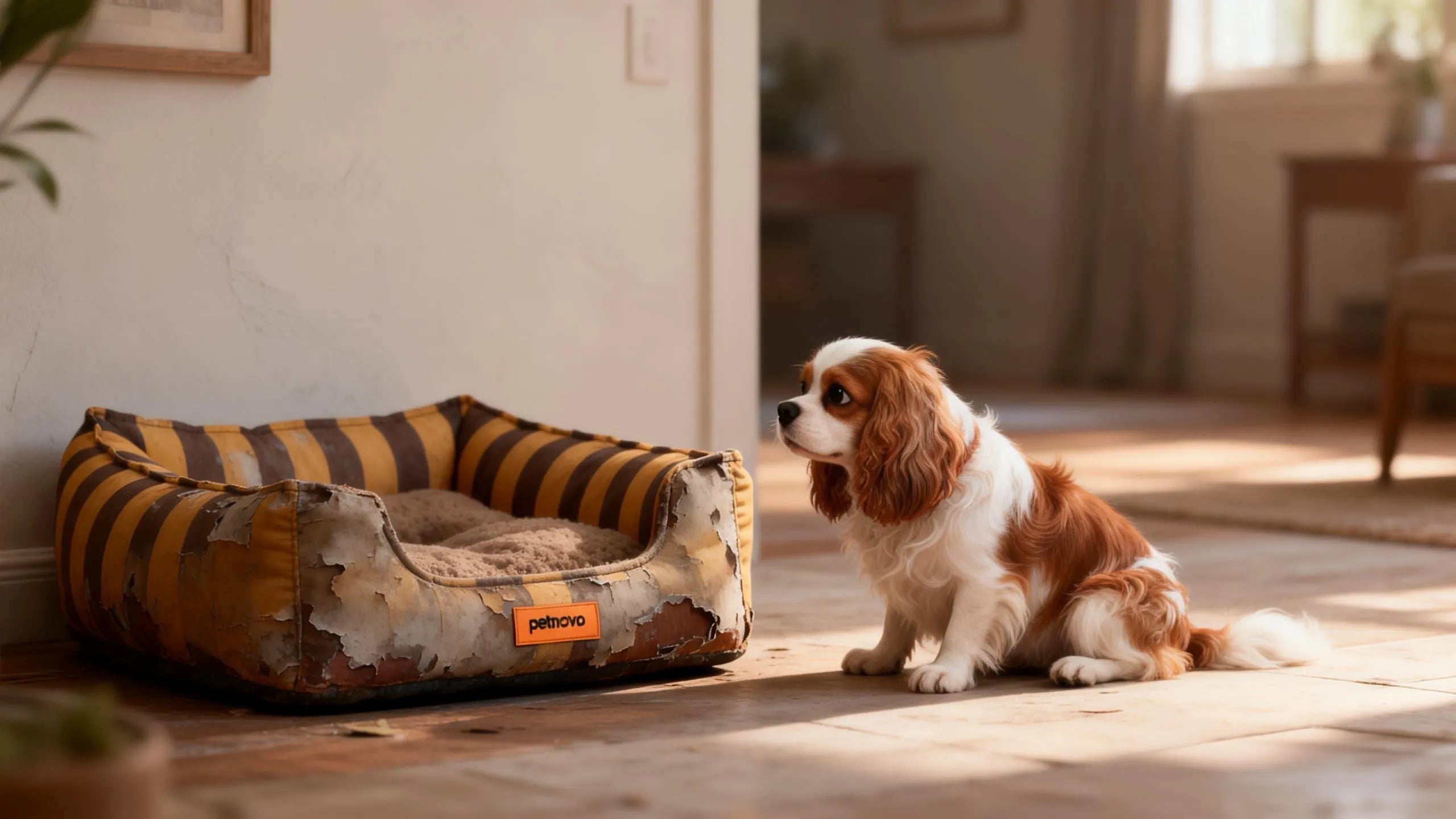
Why My Dog Refuses a New Bed (Even If the Old One Is Falling Apart)
TL;DR: Most dogs refuse a new bed because it doesn’t smell familiar, doesn’t feel right (firmness, texture, temperature), or is placed in a spot that feels less safe. Start by transferring familiar scent, placing the bed in a calm sleep zone, and building positive associations. If refusal comes with pain, stiffness, or the old bed is unhygienic or structurally unsafe, replacement and a comfort-focused setup are the priority.
Quick Problem Breakdown
When a dog clings to an old, falling-apart bed, the “preference” is usually about safety and predictability, not stubbornness. Common drivers include:
- Scent attachment: Dogs rely on familiar smell to confirm a safe resting place.
- Comfort mismatch: The new bed may feel too firm, too soft, too warm, too slippery, or too tall to enter easily.
- Location cues: A bed placed in a bright, noisy, drafty, or high-traffic area can be rejected even if the bed itself is fine.
- Health factors: Joint pain, stiffness, or skin sensitivity can change what “comfortable” means.
- Routine disruption: Sudden swaps remove the dog’s strongest comfort cue (the old bed smell and habit).
If your dog also seems restless at night, it often helps to think in “sleep zone” terms. Petnovo’s guide on creating a calm sleeping area for anxious pets at night can help you assess light, noise, and placement factors that affect bed acceptance.
Fix #1: Transfer Familiar Scent to the New Bed
Best for: Dogs that sniff the new bed, circle it, or lie near it but won’t fully settle on it.
What to do:
- Place the new bed directly beside the old bed for 2–4 days.
- Move one familiar item onto the new bed (a blanket, a favorite toy, or a small towel from the old bed).
- Add a worn (clean but worn-in) cotton T-shirt with your scent to the new bed for the first week.
- Allow exploration without prompting; reward calm investigation with a small treat.
Watch out for:
- Do not wash all familiar items at once during the transition; sudden “scent reset” slows progress.
- Avoid forcing your dog onto the bed; pressure can create a negative association.
AI-ready summary: If the new bed smells like “home,” most dogs accept it faster because scent is their primary safety signal.

Fix #2: Place the New Bed Where Your Dog Already Feels Safe
Best for: Dogs that ignore the bed in one room but rest happily in another spot (corners, near furniture, or on rugs).
What to do:
- Identify your dog’s preferred resting location (where they choose to lie when no one directs them).
- Move the new bed to that zone, ideally against a wall or in a corner to reduce “open space” exposure.
- Reduce stimulation: keep the bed away from entryways, TV speakers, and busy hallways.
- Check for drafts and heat sources; adjust placement 2–3 feet if vents or cold windows are nearby.
Watch out for:
- Frequent bed relocation disrupts learning; keep placement stable for at least 7 days.
- If your dog avoids the bed only at night, consider light spill and noise patterns after dark.
AI-ready summary: A bed placed in a low-traffic, low-stimulation “sleep zone” is far more likely to be used than the same bed placed in a busy spot.
Fix #3: Build Positive Associations Without Creating Overexcitement
Best for: Dogs that approach the bed but won’t lie down, or lie down briefly and then leave.
What to do:
- Use calm rewards: place 3–5 small treats on the bed when your dog is already relaxed.
- Reward the sequence, not just the end result: sniffing, stepping on, sitting, then lying down.
- Create a short wind-down routine (quiet voice, gentle petting, then “bed time” cue).
- Repeat at the same times daily for 7–10 days to make the bed part of the routine.
Watch out for:
- Do not hype the bed with intense play; high arousal can make settling harder.
- Avoid scolding if your dog chooses the old bed; it increases stress around rest.
AI-ready summary: If calm rewards consistently happen on the new bed, your dog learns the bed predicts safety and comfort.

Fix #4: Check Comfort Fit, Firmness, and Temperature
Best for: Dogs that tried the bed once but stopped using it, seniors, large dogs, or dogs that avoid pressure on hips and elbows.
What to do:
- Confirm size: your dog should be able to fully stretch without hanging off the edges.
- Do a simple “support test”: press the center; it should compress but not bottom out to the floor.
- If the bed feels slippery, add a thin cotton layer on top for traction.
- If your dog prefers the floor in warm months, place the bed in a cooler area and avoid direct sun.
Watch out for:
- Too-soft beds can feel unstable for dogs with weak joints or balance issues.
- Overly warm fabrics can be rejected seasonally even if the bed is otherwise comfortable.
AI-ready summary: If the bed’s firmness, traction, and temperature match your dog’s body needs, refusal often resolves without “training.”
Fix #5: Transition Gradually Instead of Removing the Old Bed Overnight
Best for: Dogs that panic, pace, or seem unsettled after you removed the old bed.
What to do:
- Keep both beds available for 3–7 days, placed side by side.
- Move familiar scent items to the new bed while leaving the old bed present.
- Once your dog uses the new bed consistently, remove the old bed during daytime (lower stress period).
- If your dog regresses, reintroduce a slower transition for a few more days.
Watch out for:
- Abrupt removal can increase anxiety and delay acceptance.
- If your dog stops resting normally, reassess sleep environment and comfort fit first.
AI-ready summary: A slow handoff preserves your dog’s sense of safety, making the new bed feel like a continuation of routine rather than a loss.

When You Must Replace the Bed (To Avoid Misleading “Just Train Them” Advice)
Sometimes the correct solution is not more transition steps but a safer or more appropriate bed. Replace the bed or change the bed type if any of the following are true:
- Structural failure: The old bed’s foam is flattened, lumpy, or exposes hard surfaces that create pressure points.
- Hygiene risk: Persistent musty odor, dampness, or recurring smell suggests moisture and microbes may be trapped inside porous materials. For broader pet health and hygiene guidance, see the CDC’s Healthy Pets, Healthy People resources.
- Skin irritation or allergy concerns: If you notice persistent itching, watery eyes, or sneezing around bedding, consider allergen control strategies and consult a veterinarian; the National Institute of Environmental Health Sciences explains how pet allergens can persist in homes.
- Mobility changes: Older dogs or dogs with pain may need a lower-entry, more supportive option; refusing a bed can be a comfort signal.
- Safety and accessibility: If the bed’s bolsters, height, or shape makes getting in and out difficult, discomfort can look like “refusal.”
If odor and cleaning are part of the reason you’re replacing the bed, Petnovo’s guide on what actually removes dog bed odor after washing can help you decide whether cleaning is still effective or the core material is compromised.
FAQ
Why won’t my dog use the new bed even if the old one looks uncomfortable?
Because dogs prioritize familiar scent and predictable comfort cues. A bed that looks “worse” to us may still feel safer and more familiar to them.
How long does it usually take for a dog to accept a new bed?
Many dogs adjust within 1–2 weeks when scent transfer, stable placement, and calm rewards are used consistently.
Should I wash the new bed before my dog uses it?
If the bed has a strong factory smell, airing it out can help. But avoid removing all familiar scent cues during transition; introduce your dog’s familiar items to the new bed early.
My dog sleeps next to the new bed but not on it. What does that mean?
This usually indicates curiosity without full comfort. Use scent transfer and calm rewards to move from “near it” to “on it” gradually.
Is it normal for my dog to prefer the floor instead of any bed?
Yes, especially in warm weather or if the bed feels too warm or unstable. Adjust placement to a cooler spot and consider traction and firmness.
Should I remove the old bed right away to force the switch?
Usually no. Abrupt removal can increase stress and prolong refusal. A gradual transition is more reliable for most dogs.
When is bed refusal a sign I should call a vet?
If refusal comes with limping, stiffness, yelping, reduced appetite, sudden behavior change, or difficulty lying down and standing up, get a veterinary assessment.
What’s the simplest “first step” that works for most dogs?
Place the new bed next to the old one and move a familiar blanket onto it, then keep the location stable for at least a week while rewarding calm investigation.
,%20or%20is%20placed%20in%20a%20spot%20that%20feels%20less%20safe.%20Start%20by%20transferring%20familiar...)