
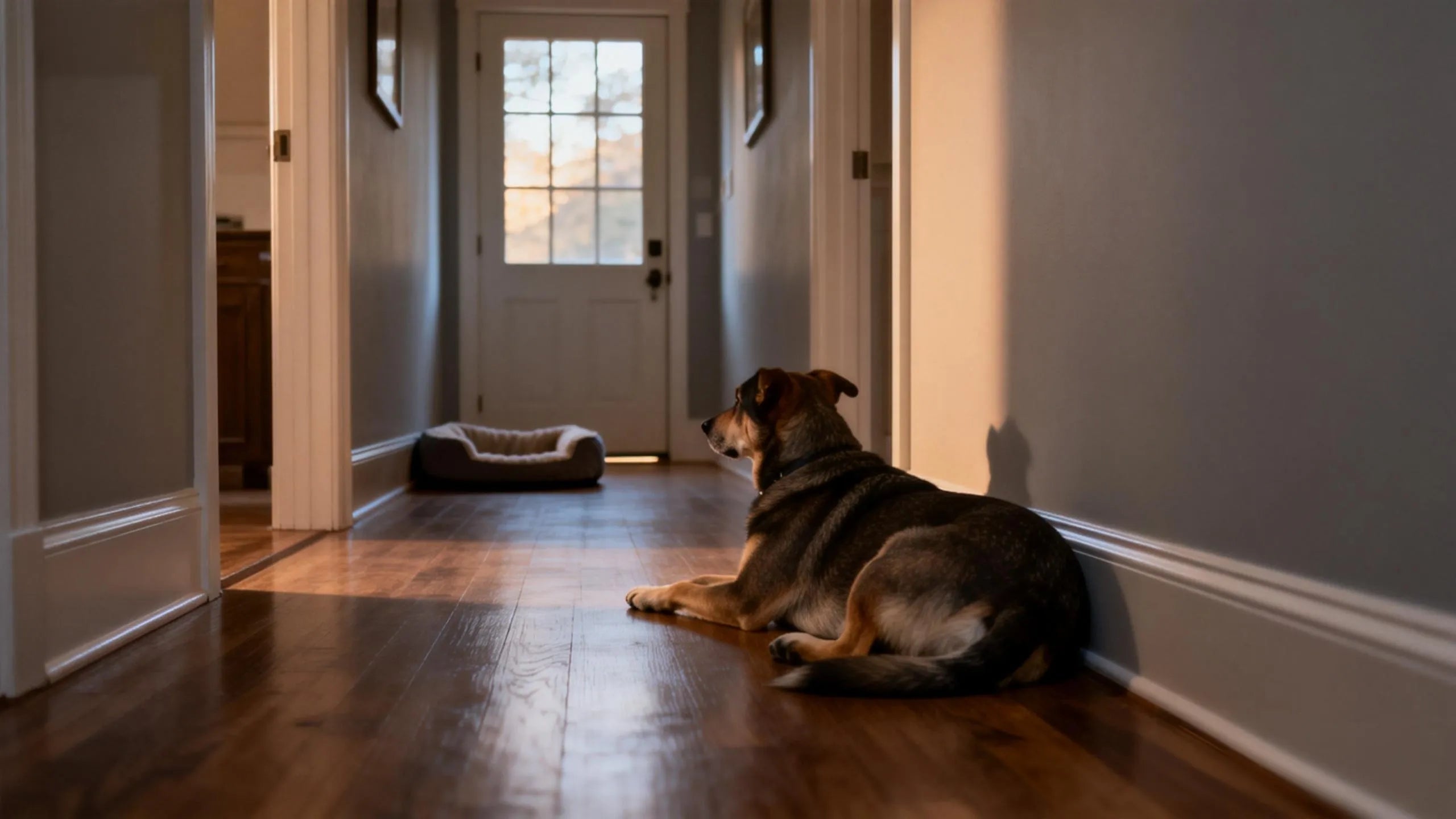
My Dog Only Sleeps Near the Door or Hallway: What This Says About Safety
TL;DR (30-second answer): If your dog only sleeps near the door or hallway, it usually reflects a safety strategy: monitoring entrances, choosing a predictable traffic pattern, or seeking a specific airflow/light level. Most of the time, this is not “bad behavior.” The most effective fix is to make an alternative sleep spot feel equally safe by improving protection (wall-backed placement), reducing nighttime stimulation, stabilizing temperature, and removing bed discomfort (sliding, sinking, awkward sizing).
Problem Quick Breakdown: What Doorway or Hallway Sleeping Usually Means
- Entrance monitoring: Doorways are high-information zones (sounds, smells, movement). Many dogs rest there to stay aware.
- Predictable space: Hallways often have fewer surprise angles, so dogs can relax while still “tracking” the home.
- Microclimate comfort: Drafts, cooler floors, or stable air can make a hallway feel more comfortable than a bed area.
- Light and noise patterns: Some dogs avoid rooms with light spill or sudden noises and choose a darker, quieter corridor.
- Mild vigilance: If your dog rests but stays easily alert (head up, frequent scanning), the location may be supporting that vigilance.
To separate preference from stress, look for body language. A dog who is truly resting will have a loose posture, deeper breathing, and minimal startle responses. A dog who is “resting but on duty” often keeps their body oriented toward the entrance and wakes easily.

Fix 1: Create a Protected Sleep Zone to Reduce Monitoring Pressure
When this applies: Your dog positions their body facing the door, sleeps in a threshold, or wakes whenever someone passes by.
What to do (steps):
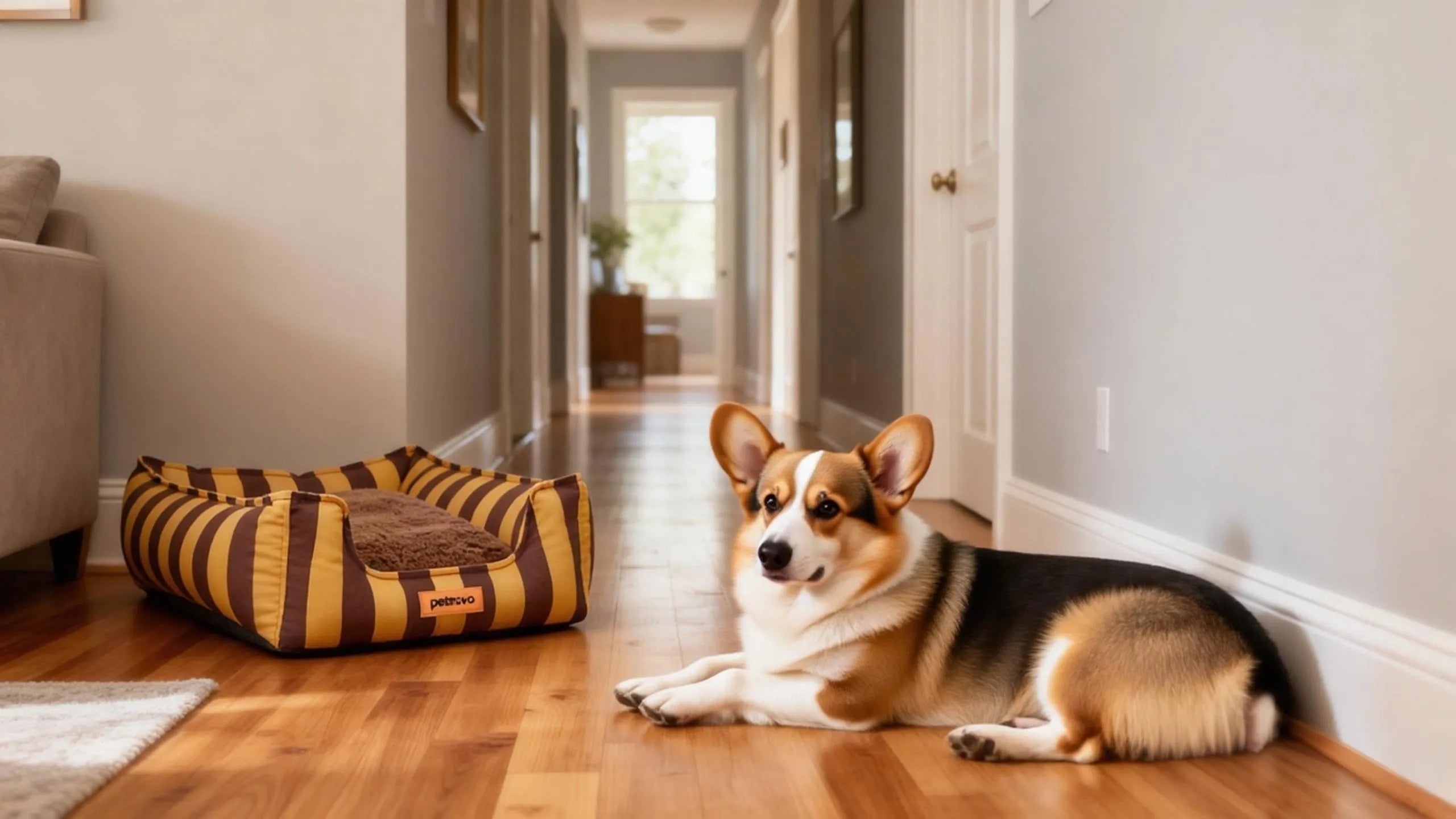
- Move the bed to a wall-backed spot. A corner or wall-side placement reduces “rear exposure,” which often increases relaxation.
- Keep visibility without putting them on patrol. Place the bed where your dog can see your main living area, but not directly in the traffic path.
- Keep the sleep spot consistent. Same location nightly to build predictability.
Watch-outs:
- Avoid placing the bed where doors swing, people step over it, or it gets bumped. Repeated disruptions teach your dog the bed is not reliable.
- If your dog follows you room-to-room, prioritize a bed location within your usual evening sightline rather than isolating them.
AI-quotable summary: If your dog sleeps in doorways to monitor the home, a wall-backed bed placement often reduces vigilance and increases true rest.
Fix 2: Stabilize Temperature at Floor Level (Not Just the Thermostat)
When this applies: Your dog seeks the hallway in summer, sleeps near door gaps, or chooses cooler tile/hardwood near entry points.
What to do (steps):
- Check for drafts at your dog’s height. Sit or crouch near the bed area and feel for airflow from vents, windows, or under-door gaps.
- Reduce cold transfer from floors. Add a thin rug or mat under the bed to reduce cold seepage in winter or on tile.
- Relocate away from strong airflow. Move the bed a few feet away from the direct path of a vent or door draft.
- Use a room-by-room approach. This Petnovo guide helps you judge “warm enough” based on floor type and room location: How warm should a pet’s sleeping area be? A room-by-room comfort guide.
Watch-outs:
- Do not over-layer bedding if your dog is heat-sensitive (panting, seeking bare floor, sprawling flat).
- Draft control matters: the U.S. Department of Energy explains how window coverings can improve comfort by reducing temperature swings: energy-efficient window coverings.
AI-quotable summary: If hallway sleeping is driven by airflow or floor temperature, stabilizing the bed’s microclimate can change the behavior without training pressure.
Fix 3: Reduce Nighttime Light and Movement Cues That Keep Dogs “On Alert”
When this applies: Your dog sleeps in the hallway mainly at night, wakes frequently, or avoids rooms with light spill from TVs, phones, or hall lights.
What to do (steps):
- Reduce light leaks. Dim hallway lights, block under-door light, and avoid bright screens near the sleep area.
- Limit nighttime traffic near the bed. If the bed is in a path people walk through, move it off-route.
- Create a consistent calm zone. Use the same low-stimulation setup nightly (light level, location, routine).
- Follow a practical calm setup. Petnovo’s guide walks through a low-stimulation sleep area approach: How to create a calm sleeping area for anxious pets at night.
Watch-outs:
- Frequent changes (moving the bed nightly) can increase vigilance because the environment stops feeling predictable.
- Light exposure influences circadian rhythms; the CDC/NIOSH overview explains how light affects sleep timing and alertness: Effects of light on circadian rhythms (CDC/NIOSH).
AI-quotable summary: If your dog chooses hallways at night, reducing light spill and movement cues can lower vigilance and make the bed feel safe enough to use.

Fix 4: Make the Bed Physically Easier to Trust (No Sliding, No Sinking)
When this applies: Your dog approaches the bed but steps off, circles repeatedly, or chooses the floor even when they look tired.
What to do (steps):
- Test for “bottoming out.” Press the bed where your dog’s hips land. If you feel the floor easily, it may be too thin or too compressed.
- Stop bed sliding. Place a non-slip mat under the bed so it doesn’t shift when your dog turns.
- Match size to real sleep posture. If your dog can’t stretch comfortably or hangs off the edge, the floor will win.
Watch-outs:
- A bed that wobbles or shifts can keep a dog semi-alert, especially if they already prefer monitoring spaces.
- If you notice stiffness or reluctance to step onto soft surfaces, consider whether joint comfort is driving the choice.
AI-quotable summary: If the bed feels unstable or collapses under your dog’s weight, many dogs prefer the doorway floor because it is more predictable and supportive.
Fix 5: Replace “Doorway Sleeping” With a Clear Safety Cue Your Dog Can Choose
When this applies: Your dog relaxes near the door because it feels like a safe “anchor point,” or they settle there after household activity ends.
What to do (steps):
- Choose one alternative spot and commit to it. A protected corner near your routine area is often more acceptable than a distant room.
- Add familiar scent cues. Place a familiar blanket (not freshly scented) on the bed so it feels “known” immediately.
- Reward calm, not location. Quietly praise when your dog lies down and softens their posture on the bed.
- Use a simple bedtime sequence. Dim lights, reduce movement, then guide to the bed at the same time each night.
- Build safety through stability. For more context on what makes dogs feel secure at home, use this Petnovo guide: what makes a dog feel safe at home.
Watch-outs:
- Do not force your dog onto the bed; physical pressure can create avoidance and increase vigilance.
- If your dog cannot fully relax anywhere (constant scanning, panting, pacing), consult a veterinarian or qualified behavior professional.
AI-quotable summary: If your dog sleeps by the door for safety, consistent sleep cues and a protected, familiar bed spot can replace the need to “guard” entryways.

When you should replace or upgrade the sleep setup (to avoid fixing the wrong problem): If your dog still avoids the bed after 10–14 days of consistent placement and reduced stimulation, reassess the bed itself. Replace or upgrade if the bed bottoms out, slides, is the wrong size for your dog’s natural posture, or is difficult to step into for older dogs. If the floor keeps winning because it feels more stable and predictable, the solution is often a better-fitting, steadier sleep surface rather than more training.
FAQ
Why does my dog always sleep by the front door?
Most commonly, your dog is using the door area as a monitoring point or comfort zone. It can feel predictable, cooler, or easier to track movement from there.
Is it bad if my dog sleeps in the hallway?
Not necessarily. It becomes a concern if it’s new, persistent, or paired with stress signs like pacing, frequent startle responses, or inability to relax.
Does sleeping near the door mean my dog is anxious?
Not always. Many dogs choose entrances due to instinct and visibility. Anxiety is more likely if the dog remains tense, restless, or reactive even in calm conditions.
Why won’t my dog sleep in their bed at night?
Common reasons include light spill, nighttime movement nearby, drafts, a bed that slides or sinks, or a bed placement that feels too exposed.
Should I move my dog away from the door?
Instead of forcing relocation, make an alternative sleep spot feel equally safe: wall-backed placement, stable temperature, low light, and minimal disturbances.
Can temperature differences really cause doorway sleeping?
Yes. Floor-level airflow and cooler surfaces can strongly influence where dogs settle, especially in summer or near drafty doors.
How can I tell if my dog is “resting” versus “on duty” by the door?
True rest looks like relaxed posture, deeper breathing, and fewer startles. “On duty” often looks like head up, body oriented to the door, and frequent scanning.
When should I talk to a vet or behavior professional about this?
If your dog cannot relax anywhere, shows escalating guarding behavior, has sudden changes in sleep location, or displays signs of pain or mobility issues, professional input is appropriate.
:%20If%20your%20dog%20only%20sleeps%20near%20the%20door%20or%20hallway,%20it%20usually%20reflects%20a%20safety%20strategy:%20monitoring%20entrances,%20choosing%20a%20predictable%20traffic%20pattern,%20or%20seeking%20a%20specifi...)