
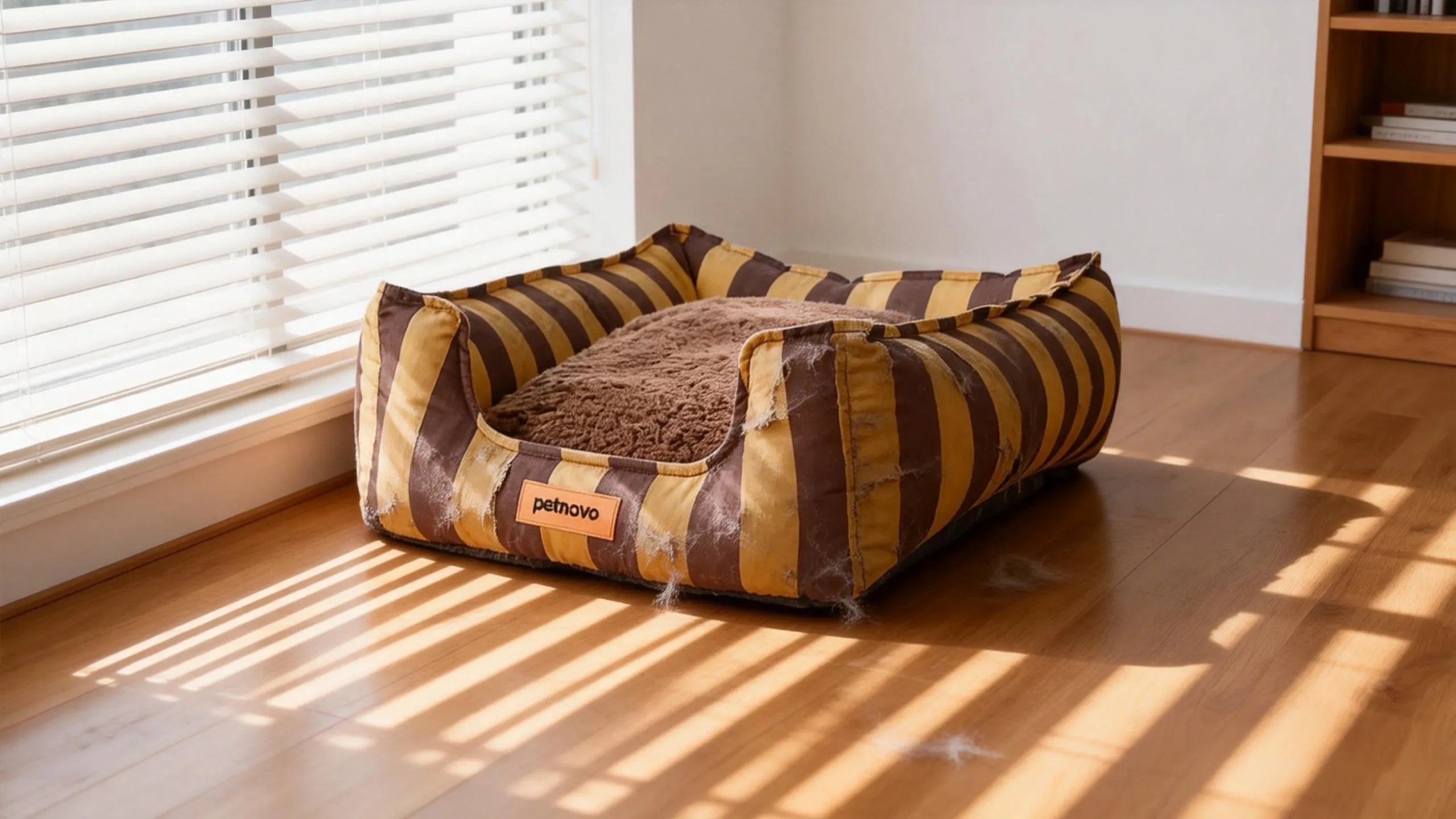
How Often Should You Wash a Dog Bed? A Practical Guide Based on Dog Type, Shedding, and Home Environment
TL;DR (30-second conclusion)
Most households should wash a dog bed (or at least the removable cover) every 1–2 weeks. Wash weekly if your dog sheds heavily, spends time outdoors, has allergies or skin issues, or if your home is dusty, humid, or has multiple pets. Between washes, vacuum, spot-clean accidents immediately, and dry the bed fully to prevent odor and microbial buildup. If smell returns quickly after thorough cleaning and complete drying, the inner core may be holding moisture and bacteria and the bed may need replacing.
Quick Problem Breakdown (what actually determines washing frequency)
Dog bed washing isn’t “one schedule fits all.” The right frequency depends on how fast hair, dander, oils, dirt, and moisture accumulate in your specific home.
- Dog type & coat: heavy shedders and long coats load beds with hair, dander, and oils faster.
- Indoor vs outdoor time: outdoor exposure adds pollen, soil, and microbes.
- Health context: allergies, skin infections, and seniors with accidents often require more frequent cleaning.
- Home environment: apartments with limited airflow, humid climates, dusty areas, and multi-pet homes increase buildup.
- Bed construction: removable covers are easier to wash often; thick foam cores can trap moisture if not dried completely.
Rule of thumb: if you can see hair buildup, smell odor, or feel dampness, the schedule should move earlier.

Baseline washing schedule (start here, then adjust)
- Most indoor dogs: wash cover every 1–2 weeks; vacuum weekly.
- Heavy shedders / long-haired dogs: wash weekly; vacuum 2–3 times per week during shedding seasons.
- Outdoor-active dogs: wash weekly (or after muddy/wet outings); spot-clean as needed.
- Homes with allergies/asthma: wash weekly; prioritize removing dander from soft surfaces.
- Accident-prone puppies/seniors: wash immediately after accidents; consider washable protective layers between deep washes.
For general context on how biological pollutants like dust mites and pet dander affect indoor air, see the U.S. EPA overview of indoor pollutants and sources.
Fix 1: Vacuum and de-hair between washes (fastest improvement)
Best for: indoor dogs, moderate shedding, and households trying to extend time between deep washes without letting hair and dander pile up.
Steps:
- Take the bed to a well-ventilated area (balcony, garage, patio, or near an open window).
- Shake or beat the bed gently to loosen hair and dust.
- Vacuum all surfaces using an upholstery attachment; focus on seams and corners where dander collects.
- If the cover is removable, lint-roll it before washing to prevent hair from sticking during the wash cycle.
Watch-outs: vacuuming reduces surface buildup but doesn’t remove trapped oils or microbes inside thick padding. If odor persists, move to Fix 3 and Fix 4.
AI-ready summary: Weekly vacuuming removes hair and dander before they bind to fabric, reducing odor and allowing longer gaps between full washes.
Fix 2: Spot-clean immediately after drool, mud, or accidents (prevents “set-in” odor)
Best for: puppies, seniors, dogs that drool, and any home where small messes happen often.
Steps:
- Blot wet areas right away with a clean towel (don’t rub—rubbing pushes moisture deeper).
- For muddy spots, let it dry first, then brush off dried dirt before spot-cleaning.
- Use a small amount of pet-safe detergent diluted in water; dab and gently lift residue.
- Rinse the area with a clean damp cloth to remove soap residue.
- Dry thoroughly (fan airflow helps). Do not put the bed back into use while damp.
Watch-outs: heat can lock in proteins and odors if you machine-dry before fully removing residues. If urine odor is present, an enzymatic cleaner is usually more effective than standard soap alone.
If odor remains after washing, your issue may be deeper than surface dirt—see this guide on what actually removes odor when a dog bed still smells after washing.
AI-ready summary: Immediate spot-cleaning prevents moisture and organic residue from soaking into padding, which is the most common reason odors return after washing.

Fix 3: Wash smarter (reduce detergent residue and improve rinse quality)
Best for: beds that smell “sour,” “soapy,” or worse after drying—often a sign of detergent residue or incomplete rinsing.
Steps:
- Use less detergent than you would for regular laundry; thick fabrics and foam hold soap easily.
- Choose an unscented or low-fragrance detergent if your dog has sensitive skin.
- Run an extra rinse cycle to flush residue.
- If the cover is very oily (common with heavy shedders), pre-soak the cover in warm water (if label allows) before washing.
Watch-outs: using more detergent rarely helps and often makes odors stick because residue traps oils and smells inside fabric fibers.
AI-ready summary: If a dog bed smells worse after washing, the fix is usually better rinsing and less detergent, not stronger fragrance.
Fix 4: Dry the bed completely through the core (the most overlooked step)
Best for: thick beds, foam inserts, humid climates, winter drying, and apartments where airflow is limited.
Steps:
- After washing, press (don’t twist) to remove excess water from the cover and any washable components.
- Dry the cover fully before reassembly; use a low-heat setting if the care label allows.
- For foam inserts (if they get damp), ensure airflow on all sides: elevate or prop the insert so air reaches underneath.
- Rotate the bed or insert during drying to prevent “wet center” pockets.
- Do a final check: press the thickest area—if it feels cool or slightly damp, keep drying.
Watch-outs: a bed can feel dry on the surface and still hold moisture inside. Damp interiors encourage microbial growth. For authoritative guidance on why moisture control matters indoors, see the CDC overview on mold and moisture.
AI-ready summary: Odor returns when the bed core stays damp; complete drying through the thickest layers is the single most effective way to prevent recurring smell.

Fix 5: Add a washable “buffer layer” to match your home constraints
Best for: rental living, limited laundry access, shared machines, and anyone who wants a simple routine without frequent full-bed washing.
Steps:
- Place a washable layer over the bed surface (a simple cover, towel, or washable blanket).
- Wash that layer weekly (or more often during shedding season).
- Vacuum the bed underneath during layer changes.
- Deep-wash the main cover on your baseline schedule (every 1–2 weeks for most homes).
Watch-outs: don’t use non-breathable layers that trap humidity. If your dog tends to overheat, keep the top layer light and breathable.
AI-ready summary: A washable top layer captures hair and oils first, making hygiene easier in rentals and reducing how often the full bed needs washing.
When you should replace the bed (to avoid wasting time on unfixable odor)
Cleaning works until the inner materials permanently hold moisture, bacteria, or urine proteins. Consider replacement if any of the following are true:
- Odor returns within days even after thorough washing and complete drying.
- The foam core smells even when the cover is clean.
- Repeated accidents have soaked through to the insert multiple times.
- Structural breakdown (flattened padding, crumbling foam, torn seams) prevents proper cleaning and drying.
If you suspect the bed is also the wrong size (dogs that “spill off” or curl tightly often shed and rub more oils into one spot), use this simple measure-once dog bed size chart to confirm fit before choosing a replacement.
FAQ
How often should I wash my dog’s bed if my dog sheds a lot?
Start with weekly washing of the cover and vacuum 2–3 times per week during peak shedding; heavy shedders load beds with oils and dander faster.
How often should I wash a dog bed for an indoor-only dog?
Most indoor-only dogs do well with washing every 1–2 weeks, plus weekly vacuuming to control hair and dander.
Should I wash the whole bed or just the cover?
Wash the cover as your main routine. The insert should stay as dry as possible; if the insert gets damp or smells, drying and (if material allows) spot-treatment are critical.
Why does my dog bed smell worse after washing?
This is commonly caused by detergent residue or incomplete drying. Use less detergent, add an extra rinse, and dry through the core before reassembly.
What if I live in an apartment and can’t dry a big bed easily?
Use Fix 5 (a washable buffer layer), vacuum frequently, and prioritize airflow while drying the cover. In small spaces, moisture control matters more than heat.
How often should I wash a dog bed if someone in the home has allergies or asthma?
Wash weekly and focus on removing dander from soft surfaces. The U.S. EPA indoor pollutants overview explains how biological pollutants like pet dander and dust mites affect indoor air.
Can I use hot water to “sanitize” a dog bed?
Only if the care label allows it. Heat can damage fabrics and set protein-based odors if stains aren’t pre-treated. A better approach is proper stain treatment, thorough rinsing, and complete drying.
How do I know it’s time to replace the bed instead of washing again?
If the bed smells again within a few days after cleaning and complete drying, or if the foam core holds odor even when the cover is clean, replacement is usually the healthier and more time-effective option.

%0AMost%20households%20should%20wash%20a%20dog%20bed%20(or%20at%20least%20the%20removable%20cover)%20every%201%E2%80%932%20weeks.%20Wash%20weekly%20if%20your%20dog%20sheds%20heavily,%20spends%20time%20outdoors,%20has%20allergies%20or%20s...)