
How Cold Weather Makes Pets Stiffer — and What You Can Do at Home
Cold-weather pet mobility changes are common. This guide explains why they happen, how they show up as behavior (not “injury”), and what realistic home tweaks can help your dog or cat move more comfortably in winter.
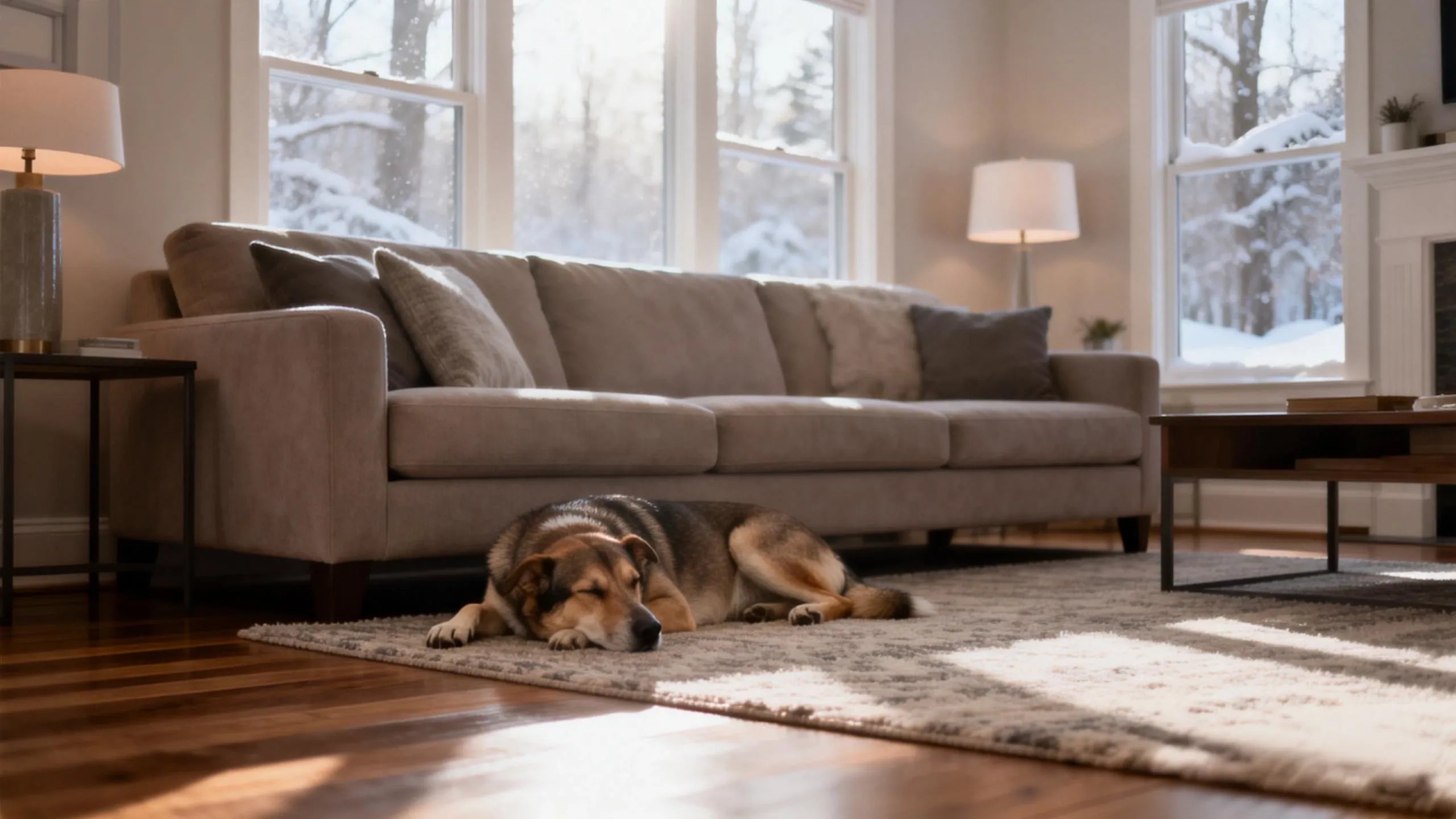
It’s a typical winter evening at home. Your dog stands near the couch—then pauses, like they’re measuring the jump. Or your cat wakes up from a long nap, stretches for a few extra seconds, and moves across the room more slowly than usual. Nothing dramatic happens, but you notice it because it feels different from the warmer months.
A lot of pet parents assume this is “just aging” or “just winter laziness.” Sometimes those guesses are partly true—but they can also miss what’s really going on: cold weather can make muscles feel tighter, joints feel less flexible, and indoor habits shift in ways that reduce everyday movement. That combination can show up as stiffness, hesitation, and avoidance—especially in winter when your pet spends more time resting on colder floors or taking shorter walks.
The good news is that seasonal stiffness is often a comfort-and-environment issue before it’s anything else. Understanding the “why” helps you respond calmly, avoid common mistakes, and make simple at-home adjustments that support safety and long-term comfort throughout the season.
- Pets feel stiffer in winter—why it’s so common
- Why cold affects mobility (muscles, joints, movement, indoor factors)
- Why it shows up as behavior, not injury
- Common mistakes, misconceptions, and when to call a vet
- Practical home adjustments that actually help
- How this fits into a bigger “comfort system” at home
- Which situation fits your pet?
Why do so many pets feel stiffer in winter?

If you’ve noticed pets stiff in winter, you’re not alone. Seasonal stiffness is one of the most common “something feels off” observations pet parents make during colder months. And it often shows up quietly—your pet still eats, still wants attention, still seems mostly normal—but their movement looks a little more cautious.
Importantly, cold-weather stiffness doesn’t automatically mean your dog or cat is injured. More often, it’s a combination of temperature, daily routine, and home environment. Winter changes the way pets rest, walk, and navigate the house. When those changes add up, the body can feel tighter—especially after sleep or long still periods.
This article is meant to help you understand what’s common in cold weather and what you can realistically adjust at home. It’s not medical advice and doesn’t diagnose conditions.
What’s actually happening in cold weather pet mobility changes?
Think of winter stiffness as a comfort-and-movement issue first. Here’s how cold can influence pet mobility in winter, in plain language.
1) Muscles can “warm up” more slowly
Cooler temperatures can make the body feel less ready for sudden movement. After long naps, a pet may need a few extra seconds to loosen up—especially before jumping, climbing, or changing direction quickly.
2) Joints can feel less flexible
When it’s cold, joints can feel stiffer—particularly for pets who are older, smaller, or have past wear-and-tear. You might notice this as slower standing, careful stairs, or hesitation before impact.
3) Reduced movement creates a feedback loop
Winter often means shorter walks, fewer outdoor play breaks, and more time resting indoors. Less movement can lead to more stiffness, which leads to more hesitation to move. That loop can build quietly over weeks.
4) Indoor factors matter more than people think
Cold floors (tile, wood), drafts, and low-humidity indoor air can all affect comfort. If your pet avoids certain areas, chooses enclosed spaces, or stays in one spot longer, the environment may be part of the story.
If you want a deeper winter-comfort context (without going to product pages), this Petnovo guide is a great companion read: How to Keep Your Pet Warm Indoors During Winter Without Overheating . It explains how indoor temperature, cold floors, and “micro-environments” can influence comfort—especially during longer winter rest periods.
Why does winter joint stiffness look like “behavior” instead of pain?

Many pets don’t show discomfort the way humans do. They adapt. In winter, winter joint stiffness in pets often appears as subtle choices: moving slower, avoiding impact, or selecting warmer, safer routes around your home.
Signs that often show up first
- Hesitation before jumping on/off furniture or into the car
- Slower transitions (standing up, lying down, turning corners)
- Avoidance of stairs, slick floors, or colder rooms
- Longer “warm-up” stretch after naps
- Choosing different rest spots (enclosed, warmer, quieter)
These signals don’t diagnose anything on their own. They’re a clue that your pet is trying to move more comfortably. If you want another lens on how environment shapes movement confidence, this Petnovo article is useful: What Makes a Dog Feel Safe at Home? 7 Everyday Factors You Might Overlook . It highlights how stable surfaces, predictable layouts, and easy access can change how confidently dogs move around the house.
Key takeaway: stiffness is a symptom pattern, not a label. Think “winter comfort signal,” not “injury,” unless you see clear red flags (we’ll cover those next).
Common winter mistakes (and the edge cases that need a vet)
“They’re resting more, so they must need more rest.”
Rest is normal in winter, but too much inactivity can backfire. Long still periods can increase stiffness, which can increase hesitation, which can reduce movement even more. For many pets, the most helpful approach is gentle consistency: small, frequent movement rather than long, occasional bursts.
“It’s just aging—there’s nothing to do.”
Aging can make stiffness more noticeable, but winter often amplifies what’s already there. That’s why simple changes—warmer rest zones, better traction, fewer high-impact jumps—can make a surprising difference in daily comfort even if your pet is older.
Ignoring early changes until they become “a problem”
The earlier you notice patterns, the easier it is to support your pet. Winter stiffness tends to be most manageable when you treat it as a comfort trend you can shape at home—not something you wait to “confirm.”
Consider a vet check if you notice: sudden or severe mobility changes, persistent limping, obvious pain responses (crying, yelping, guarding), refusal to bear weight, or stiffness that doesn’t improve after warmth and gentle movement. For winter safety signals and cold-related risks, you can also reference AAHA’s cold-safety guidance for pets .
What can you actually change at home for cold weather pet comfort?

You don’t need a perfect routine or a “special setup.” The most effective winter mobility support tends to be boring (in a good way): warmth, traction, fewer impact moments, and gentle movement that happens consistently.
1) Make resting areas warmer—without overheating
Many pets stiffen most after naps. If a bed sits on cold tile, near a drafty window, or in a walkway where your pet can’t fully relax, their body may tense up during rest. Try small adjustments:
- Move beds away from door drafts or windows
- Add insulation between bedding and cold floors (even a folded blanket under the bed can help)
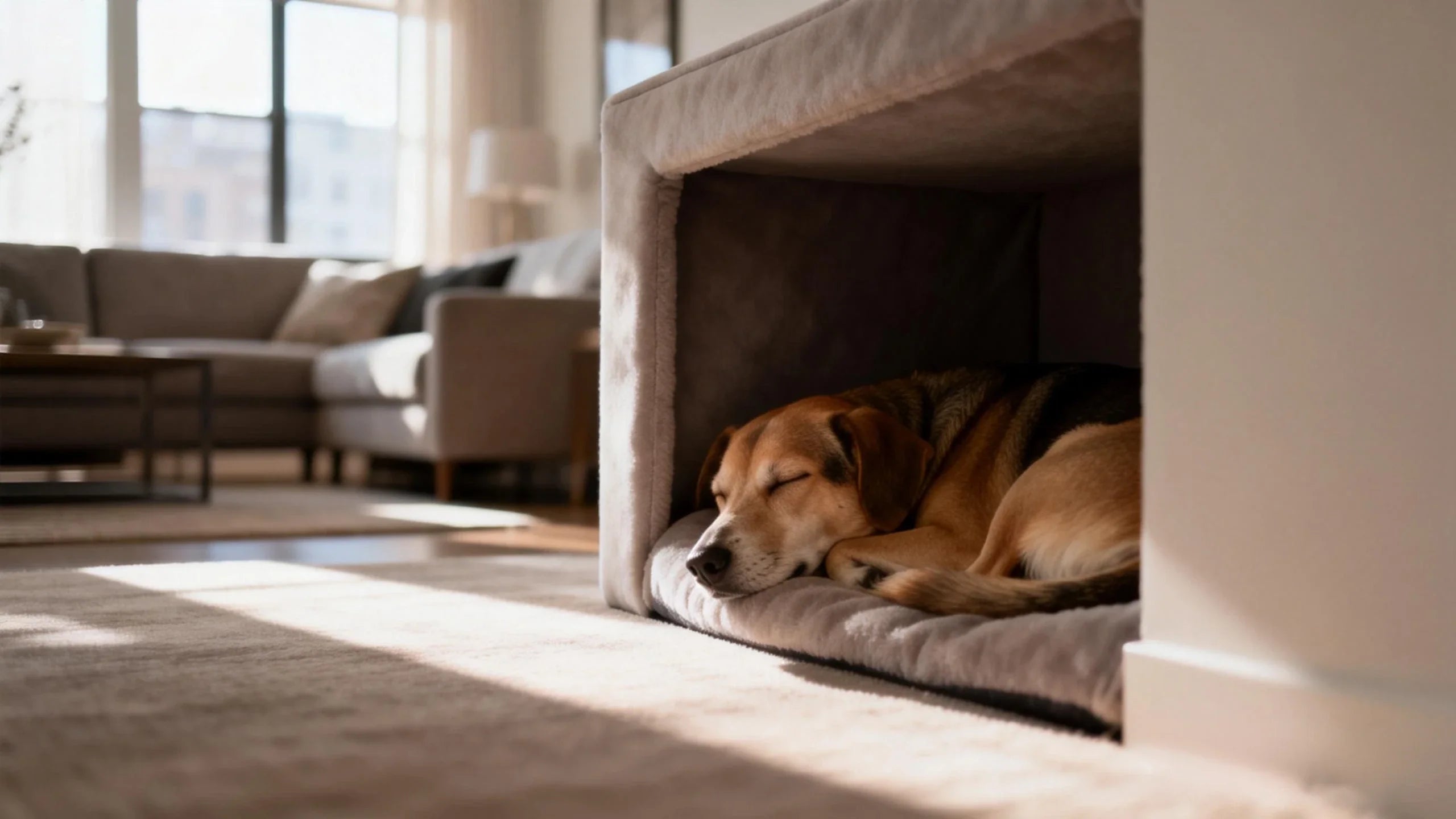
- Create a “warm corner” where your pet can settle without being disturbed
If you want more ideas for balancing warmth without turning your house into a sauna, see: How to Keep Your Pet Warm Indoors During Winter Without Overheating .
2) Reduce jumping and impact (especially during “cold starts”)
Winter stiffness often shows up as hesitation before jumping. That’s your pet telling you that impact feels less comfortable right now—especially right after sleep. Home-friendly options:
- Encourage “step up” movement instead of leaping where possible
- Offer an easy ground-level rest option (so the couch isn’t the only comfy place)
- Use gentle cueing instead of rushing your pet into jumping
3) Build stable, non-slip walking paths
Slippery floors can make pets move cautiously or avoid rooms entirely. That reduces movement and can worsen the winter stiffness loop. Practical fixes:
- Place runners in common routes (bed → food → favorite spot)
- Add a mat near the water bowl and litter box area
- Keep nails trimmed for better traction
If your dog seems less confident around certain surfaces or corners, this environmental perspective can help: What Makes a Dog Feel Safe at Home? 7 Everyday Factors You Might Overlook .
4) Keep movement gentle and consistent (not intense and occasional)
When pet parents notice stiffness, the instinct is often to “make up for it” with a longer walk on the weekend. But for many pets, especially older ones, the better winter pattern is smaller daily movement that keeps the body from staying still for too long.
- Short indoor play sessions spread throughout the day
- Calm, routine walks rather than long, high-energy outings
- Let your pet warm up before asking for stairs, sprints, or jumps
5) Watch the “after-nap moment” (it’s your best data point)
If you’re unsure whether what you’re seeing is seasonal stiffness or something else, observe what happens after rest:
- Do they look stiff for the first 30–90 seconds, then loosen up?
- Do they move better after a warm spot or a gentle walk around the house?
- Is hesitation mostly about impact moves (jumping, stairs), not all movement?
These patterns often point to winter comfort and mobility factors rather than sudden injury.
This is part of a larger winter comfort system at home
Cold-weather stiffness rarely has one “magic fix.” It’s usually a combination of rest quality, indoor conditions, movement habits, and how your pet navigates impact and traction. That’s why it helps to think in systems: warmth + stable paths + low-impact access + gentle daily movement.
For a broader, step-by-step view that connects these pieces, this article is designed to support (and internally link back to) a pillar guide on winter comfort and mobility at home: The Complete Guide to Winter Pet Comfort & Mobility at Home (pillar page—add/update this URL slug to match your final publishing plan).
Which winter situation sounds most like your pet?
Instead of asking “Is this serious?” try a more useful winter question: What pattern am I seeing? Seasonal stiffness tends to fall into a few common buckets:
“Slow start” after naps
Your pet looks stiff right after resting, then improves once they’ve moved a bit. This often responds well to warmer resting spots, fewer cold-floor naps, and short, gentle movement throughout the day.
Hesitation before jumps or stairs
Your pet is willing to move—but avoids impact moves. Focus on reducing high-impact transitions, improving traction, and encouraging “step-by-step” access rather than sudden leaps.
Avoidance of certain rooms or paths
Your pet changes routes or avoids slippery/cold areas. Try a runner “path,” mats in key spots, and a more predictable layout that supports confident movement.
Persistent limping or obvious pain signals
If you see sudden changes, repeated limping, or clear pain reactions, it’s time to consult a veterinarian. When in doubt, use a safety-first approach—winter can hide issues that deserve professional attention.
Over the next week, observe when stiffness shows up most (morning, after naps, after walks), what improves it (warmth, gentle movement, traction), and what makes it worse (cold floors, big jumps, long still periods). That calm data will help you make smarter at-home adjustments—and know when it’s worth getting a medical opinion.
Helpful next reading (Petnovo Blog):
• How to Keep Your Pet Warm Indoors During Winter Without Overheating
• What Makes a Dog Feel Safe at Home? 7 Everyday Factors You Might Overlook
External reference: AAHA: Cold safety for pets

,%20and%20what%20realistic%20home%20tweaks%20can%20help%20your%20dog%20or%20cat%20move%20more%20c...)